GPU Comparison

RTX 4050 vs RTX 4060
2026 · Same Chip, Different Price Reality

The two GPUs share a die, a generation and a wattage ceiling. The RTX 4060 adds 20% more cores and a third more memory — and, on Amazon.in this week, a 52% price premium that has quietly made the upgrade a bad deal. Here is the silicon compared first, then the machines worth buying.

Nopturnia Editorial
21 min read India 8 laptops
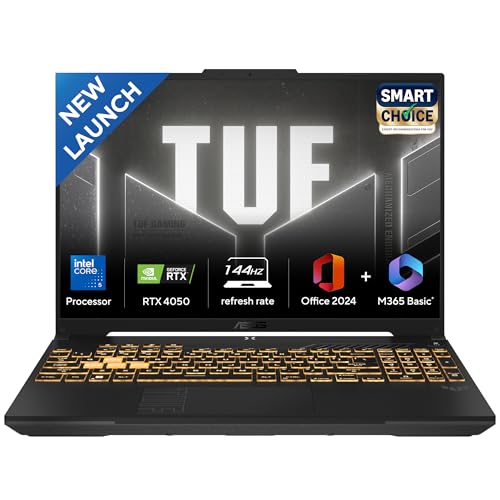
RTX 4050 vs RTX 4060 laptop GPUs compared — ASUS TUF Gaming F16 running the RTX 4050 at 115W

Overview

Two names, one piece of silicon

The RTX 4050 and RTX 4060 laptop GPUs are the same chip. Both are cut from NVIDIA's AD107 die, both are Ada Lovelace, both support DLSS 3 frame generation, and both are rated by NVIDIA for exactly the same 35W to 115W power band. The 4060 simply has more of the chip switched on: 3,072 shader cores against 2,560, and a 128-bit memory path against 96-bit. In NVIDIA's own framing that is worth somewhere between 15% and 25% more performance.

That would be a straightforward upgrade question if the two tiers sat where they used to. They no longer do. Checked against live, buyable Amazon.in offers on 28 September 2026, RTX 4050 laptops start at ₹93,500 and we counted 22 of them with a real offer attached. RTX 4060 laptops: six, the cheapest at ₹1,41,999. The tier has thinned to clearance stock, and clearance stock in a memory shortage does not get cheaper — it gets scarcer and dearer.

So the honest comparison is not "is the 4060 faster" — it is, modestly — but "is it 52% faster", because that is what the price gap now asks. This article compares the two GPUs properly first: cores, bus width, bandwidth, memory and the one specification that outranks all of them. The laptops worth buying come afterwards, at the bottom of the page. If you want a single-tier roundup instead, the RTX 4050 laptop guide and the full RTX tier ladder go deeper.

Side-by-side

RTX 4050 vs RTX 4060: the specifications

Scroll right on smaller screens to see all columns.

Specification RTX 4050 Laptop RTX 4060 Laptop Difference
Architecture
Ada Lovelace Ada Lovelace Identical
GPU die
AD107 AD107 Identical
CUDA cores
2,560 3,072 +20%
Video memory
6GB GDDR6 8GB GDDR6 +33%
Memory bus
96-bit 128-bit +33%
Memory bandwidth
192 GB/s 256 GB/s +33%
Memory speed
16 Gbps 16 Gbps Identical
TGP range
35–115W 35–115W Identical
Dynamic Boost
+10–25W +15–25W Effectively equal
DLSS 3 frame generation
Yes Yes Identical
DLSS 4 multi-frame gen
No No Neither — 50-series only
Typical performance gap
Baseline +15–25% at matched wattage
Cheapest laptop (Amazon.in)
₹93,500 ₹1,41,999 +52%
Machines with a live offer
22 6 Tier thinning out

Core counts, bus widths and bandwidth are NVIDIA's published laptop-GPU figures. Price and availability rows were measured on 28 September 2026 by querying every RTX 4050 and RTX 4060 laptop we could find for a live buyable Amazon.in offer — a listing that exists but has no offer attached does not count.

Under the Hood

What the extra 20% actually buys

The table above lists four real differences. They do not all matter equally, and one of them matters far more than the marketing suggests. Here is what each one does once a game is running.

512 extra CUDA cores: the smallest difference

Shader cores do the arithmetic behind every pixel, so 3,072 of them should finish a frame faster than 2,560. But cores only help while they have work and data to hand, and a laptop GPU is thermally limited long before it is core limited. In practice this 20% on paper delivers closer to 10–15% in real frame rates, and it delivers none of it if the chassis will not let the chip draw the watts. This is the specification people buy the 4060 for, and it is the least decisive one.

96-bit versus 128-bit: the difference that shows up

The memory bus is how fast the GPU can move textures between its memory and its cores, and here the 4060's advantage is structural rather than incremental. A 128-bit path at 16 Gbps gives it 256 GB/s; the 4050's 96-bit path gives 192 GB/s. Ada's large L2 cache hides a lot of this at 1080p, which is why the two GPUs feel closer than the numbers imply. Raise the resolution to 1440p, or turn on ray tracing, and the cache stops covering for the narrower bus — that is where most of the 4060's real-world lead comes from.

6GB versus 8GB: a cliff, not a slope

Video memory does not degrade gracefully. While textures, shadow maps and ray-tracing structures fit, the extra 2GB does nothing at all; once they do not fit, the GPU starts fetching across the PCIe bus and frame times collapse into stutter rather than settling at a lower average. 6GB is genuinely tight in 2026 for new titles at high texture settings, and it is the one place where the 4060 is not 20% better but categorically better. Turning textures from Ultra down to High usually steps back from the cliff, which is why the 4050 remains perfectly usable — but it is a compromise the 4060 does not ask you to make.

TGP: the specification that outranks all three

Total Graphics Power is the wattage the laptop permits its GPU to draw, and NVIDIA gives both chips the identical 35W to 115W range. The manufacturer picks a point inside it. That choice is worth more than the gap between the two GPUs: ASUS sells an RTX 4050 configured at 115W and another at 65W, a 77% spread within one tier. A 115W RTX 4050 and a 75W RTX 4060 are a genuine contest, and nothing on either lid tells you which you are holding. Read the wattage classes below before you read the GPU name.

Explained

The six configurations you are actually choosing between

“RTX 4050” and “RTX 4060” each describe several quite different products once the manufacturer has set the power limit. These are the six you will meet on Amazon.in today, ranked roughly by what they deliver rather than what they are called.

RTX 4050 at 60–75W — the thin-chassis version

Found in 16-inch machines that prioritise weight, and in anything under ₹1 lakh. ASUS publishes 65W + 25W Dynamic Boost for its TUF A16. Comfortable at 1080p medium in current titles and fine for esports, but it is the slowest configuration either GPU ships in and it is easy to buy by accident.

RTX 4050 at 90–100W — the volume configuration

What most ₹1.1–1.3 lakh Victus and LOQ machines ship. Manufacturers rarely state it, so treat an undisclosed 4050 as sitting here. This is the sweet spot of the tier on price-to-performance and where the majority of our picks land.

RTX 4050 at 115W — the maxed-out one

NVIDIA's ceiling for the chip, and rare enough that ASUS advertises it. A 4050 running 115W + 25W Dynamic Boost closes most of the gap to a mid-power 4060 and will beat a throttled one outright. Still only 6GB of memory, so it does not solve the texture problem — it solves the speed one.

RTX 4060 at 75–90W — the one to avoid paying for

Common in slim 14-inch designs. You get the 8GB frame buffer and the wider bus, which is real, but you give back most of the core-count advantage to the power limit. Against a 115W RTX 4050 costing ₹30,000 less, this configuration is a poor use of money unless the 8GB specifically solves your problem.

RTX 4060 at 105–115W — the tier working properly

A full-power 4060 in a 15- or 16-inch chassis with the cooling to sustain it is a genuinely capable 1440p machine and the only version that earns the tier's reputation. The catch in India right now is price: these start around ₹1.5 lakh, where current-generation hardware is already available.

The option outside the question — RTX 5050 8GB

Worth naming because of where it sits on price. A current-generation Blackwell GPU with 8GB of GDDR7 and DLSS 4 multi-frame generation is on Amazon.in at ₹1,39,990 — below every RTX 4060 laptop in this guide. Any 4060 shopping above that figure is competing with newer silicon, not just with the 4050.

Before You Buy

6 Things to Check

Search the listing for a wattage figure first

Before the GPU name, before the price. ASUS states “Graphic Wattage” in its specification block; most other brands state nothing. An undisclosed figure is not automatically bad, but a manufacturer that reached 115W almost always says so — silence usually means the middle of the range.

“140W TGP” on a 4050 is not 140W of TGP

NVIDIA's ceiling for both chips is 115W, so any larger number is measuring something else. The ASUS TUF F16 in this guide advertises “140WTGP” in its title and then clarifies in the description: 115W + 25W Dynamic Boost. Lenovo's “TDP up to 170W” and HP's “TPP” figures are whole-platform power, not the GPU's share.

Check what processor the discount is hiding

The cheapest way into a dying tier is usually an old platform. The least expensive RTX 4060 on Amazon.in pairs it with a 12th-generation Core i5 from 2022, while RTX 4050 machines ₹30,000 below it ship 13th- and 14th-generation chips. Read the CPU generation before you congratulate yourself on the GPU.

One memory stick or two

Several machines here ship 16GB or 24GB as a single module, which halves memory bandwidth and costs real frames in CPU-bound games. Look for “2 x 8GB” or “1 x 16GB” in the specification block — the HP Victus fa2650TX is the only 4050 in this guide that arrives dual channel.

Colour gamut, not refresh rate

Every machine in this class advertises 144Hz because it is cheap to deliver. The figure that separates them is coverage: the Lenovo panels here are 100% sRGB, the HP Victus ones 62.5% sRGB, at the same 300 nits and the same refresh rate. That difference is visible on the shelf; the 20% GPU gap is not.

Confirm the offer is live, not just listed

A clearance tier leaves dead listings behind: the page still loads, the price still shows, and there is no seller attached. Four of the six RTX 4060 laptops we verified are flagged limited quantity, and all six are sold by third-party merchants rather than Amazon's own retail arm. Check the seller name and the stock line before you commit.

The Shopping List

Which laptop to actually buy

Click Amazon to buy at the listed price.

Eight machines, every price confirmed against a live buyable Amazon.in offer on 28 September 2026. Four RTX 4050s, three RTX 4060s — which is nearly every 4060 still purchasable — and one current-generation RTX 5050 included because of where it lands on price. Note the fourth and fifth entries: a maxed-out 115W RTX 4050 and the cheapest RTX 4060, ₹9 apart.

Laptop Price GPU VRAM GPU Power CPU Rating Buy
Lenovo LOQ 2024 (RTX 4050 6GB)
Lenovo LOQ 2024
Best RTX 4050
₹1,11,989 RTX 40506GB GDDR6Not disclosedi5-13450HX 4.3 Amazon
HP Victus fa2650TX (RTX 4050 6GB)
HP Victus fa2650TX
True Dual Channel
₹1,18,990 RTX 40506GB GDDR6Not disclosedi5-13450HX 4.2 Amazon
Lenovo LOQ Essential (RTX 4050 6GB)
LOQ Essential
Best CPU Per Rupee
₹1,19,390 RTX 40506GB GDDR6Not disclosedRyzen 7 7735HS 4.3 Amazon
ASUS TUF Gaming F16 (RTX 4050 6GB, 115W)
ASUS TUF F16
Most Power
₹1,41,990 RTX 40506GB GDDR6115W + 25WCore 5 210H 4.5 Amazon
Lenovo LOQ (RTX 4060 8GB)
Lenovo LOQ 4060
Cheapest 8GB
₹1,41,999 RTX 40608GB GDDR6Not disclosedi5-12450H 3.9 Amazon
HP OMEN 16 (RTX 4060 8GB)
HP OMEN 16
Best RTX 4060
₹1,52,500 RTX 40608GB GDDR6Not disclosed14th Gen Core i7 4.4 Amazon
Lenovo Legion 5 (RTX 4060 8GB)
Lenovo Legion 5
Best Equipped
₹1,76,999 RTX 40608GB GDDR6Not disclosedi7-13650HX 4.4 Amazon
ASUS Gaming V16 (RTX 5050 8GB)
ASUS Gaming V16
Better Than Both
₹1,39,990 RTX 50508GB GDDR7Not disclosedCore 5 210H 4.5 Amazon

“GPU Power” is the manufacturer's own stated Total Graphics Power. Not disclosed means no TGP figure appears anywhere on the listing — only ASUS publishes one on Indian listings for these two tiers.

Best RTX 4050 01 / 8
Lenovo LOQ 2024 gaming laptop with RTX 4050 6GB and 100% sRGB display Lenovo

Lenovo LOQ 2024 (RTX 4050 6GB)

4.3 / 5 ₹1,11,989

The pick we would hand most 1080p buyers, and the cheapest sensible way into Ada graphics. It gets right the things the cheapest 4060 skimps on for ₹30,010 more — a colour-accurate screen and a current processor. Nothing here is exciting; everything here is correct.

GPURTX 4050
VRAM6GB GDDR6
GPU PowerNot disclosed
CPUCore i5-13450HX
  • 100% sRGB at 300 nits, rare under ₹1.2 lakh
  • Ten cores and sixteen threads on DDR5-4800 memory
  • Flagged as limited stock, and includes onsite warranty cover
True Dual Channel 02 / 8
HP Victus fa2650TX gaming laptop with RTX 4050 6GB and dual-channel DDR5 memory HP

HP Victus fa2650TX (RTX 4050 6GB)

4.2 / 5 ₹1,18,990

The only machine in this guide whose memory arrives as two sticks, so it runs dual channel out of the box instead of after an upgrade. HP pays for that with the worst panel here. Buy it if you care more about frame consistency than colour.

GPURTX 4050
VRAM6GB GDDR6
Memory16GB (2 x 8GB)
CPUCore i5-13450HX
  • 62.5% sRGB coverage, well behind both Lenovo screens
  • B&O audio tuning and an RGB backlit keyboard
  • Wi-Fi 6 with Bluetooth 5.4, and a 2.29kg chassis
Best CPU Per Rupee 03 / 8
Lenovo LOQ Essential gaming laptop with Ryzen 7 7735HS and RTX 4050 6GB Lenovo

Lenovo LOQ Essential (RTX 4050 6GB)

4.3 / 5 ₹1,19,390

More usable processor than anything near this price: eight full cores rather than a mix of performance and efficiency ones. Add a colour-accurate panel and it becomes the best-balanced RTX 4050 here, for ₹400 more than the Victus above it.

GPURTX 4050
VRAM6GB GDDR6
CPURyzen 7 7735HS
Memory16GB DDR5-4800
  • Lightest machine in this guide at just 1.8kg
  • One SO-DIMM fitted, so budget a second stick
  • Ships with Office Home 2024 and three months of Game Pass
Most Power 04 / 8
ASUS TUF Gaming F16 laptop running the RTX 4050 at 115W graphics power ASUS

ASUS TUF Gaming F16 (RTX 4050, 115W)

4.5 / 5 ₹1,41,990

The reason this comparison is not simple. ASUS runs the 4050 at NVIDIA's maximum and publishes the figure, so this machine will out-run plenty of 4060 laptops that quietly sit at 75W. It costs ₹9 less than the cheapest 4060 you can buy.

GPURTX 4050
VRAM6GB GDDR6
GPU Power115W + 25W boost
CPUIntel Core 5 210H
  • Title says “140W TGP”; the description spells out the split
  • 16-inch FHD+ 16:10 at 1920 x 1200, more usable height
  • Eight cores, twelve threads and a 512GB Gen4 drive
Cheapest 8GB 05 / 8
Lenovo LOQ gaming laptop with RTX 4060 8GB and a 350-nit G-Sync display Lenovo

Lenovo LOQ (RTX 4060 8GB)

3.9 / 5 ₹1,41,999

The cheapest way onto 8GB, and a clear illustration of what this tier now costs. To reach the price Lenovo pairs the newer graphics with a processor from 2022, so you gain video memory and hand back processing speed. A narrow, specific win.

GPURTX 4060
VRAM8GB GDDR6
GPU PowerNot disclosed
CPUCore i5-12450H
  • Brightest screen in this guide at 350 nits, with G-Sync
  • Eight cores and twelve threads, two generations old
  • Wi-Fi 6E and DDR5-4800; storage expandable to 1TB
Best RTX 4060 06 / 8
HP OMEN 16 gaming laptop with RTX 4060 8GB and a 165Hz display HP

HP OMEN 16-ae0002TX (RTX 4060 8GB)

4.4 / 5 ₹1,52,500

If you have decided on a 4060, buy this one. A current-generation Core i7, a full terabyte and the fastest panel in the guide make it the only machine in the tier that feels like current hardware rather than remaining stock cleared at a premium.

GPURTX 4060
VRAM8GB GDDR6
GPU PowerNot disclosed
CPU14th Gen Core i7
  • 16.1-inch 165Hz IPS panel, 7ms response, 300 nits
  • 1TB SSD and 16GB DDR5, so no immediate upgrades
  • Listed as limited quantity and sold by a third party
Best Equipped 07 / 8
Lenovo Legion 5 gaming laptop with RTX 4060 8GB and 24GB dual-channel memory Lenovo

Lenovo Legion 5 (RTX 4060 8GB)

4.4 / 5 ₹1,76,999

The best-equipped 4060 still on sale, and the clearest example of the tier's problem. Everything around the GPU is excellent: the memory is genuinely dual channel, the panel colour-accurate, the processor properly serious. It still costs ₹37,009 more than current-generation silicon that beats it.

GPURTX 4060
VRAM8GB GDDR6
CPUCore i7-13650HX
Memory24GB (2 x 12GB)
  • Fourteen cores and twenty threads, the strongest chip here
  • 100% sRGB at 300 nits with G-Sync and 144Hz
  • Only 512GB of storage at nearly ₹1.8 lakh
Better Than Both 08 / 8
ASUS Gaming V16 laptop with a current-generation RTX 5050 8GB GDDR7 graphics card ASUS

ASUS Gaming V16 (RTX 5050 8GB)

4.5 / 5 ₹1,39,990

The answer to the question this article asks. For less than the cheapest RTX 4060 you get a current-generation Blackwell GPU, faster GDDR7 memory and a 2026 chassis. If your budget stretches to ₹1.4 lakh, start here rather than with either 40-series tier.

GPURTX 5050
VRAM8GB GDDR7
CPUIntel Core 5 210H
Weight1.95kg
  • DLSS 4 multi-frame generation, which no 40-series laptop supports
  • 16-inch FHD+ 16:10 panel at 144Hz and 300 nits
  • In stock without a limited-quantity flag, unlike the 4060s

Our Method

How we compared these two GPUs

Every machine here is scored on five factors: disclosed graphics power in watts and whether it is disclosed at all, VRAM in GB measured against the resolution the panel runs, processor generation rather than just its tier name, display quality as colour gamut and nits rather than refresh rate alone, and memory configuration including whether the RAM ships single or dual channel. We weight the first two hardest, because a 115W RTX 4050 and a 75W RTX 4060 are separated by far less than their names suggest, and the 6GB frame buffer is the one place the 4060 is categorically rather than incrementally better.

GPU specifications come from NVIDIA's published laptop figures, not from retailer copy, which contradicts itself often — one listing in our shortlist described an RTX 4060 as having 6GB of memory, a configuration NVIDIA has never shipped. Wattage figures are quoted only where the manufacturer states them; where a listing advertises a number above NVIDIA's 115W ceiling we treat it as platform power and say so rather than reprinting it. Every price was confirmed on 28 September 2026 against a live, buyable Amazon.in offer — a catalogue price attached to no seller does not count, which is how we established that only six RTX 4060 laptops remain purchasable. Prices are indicative, verified at publication, and rechecked at each update. Nopturnia earns an affiliate commission on qualifying purchases, and it never changes where a machine lands in these rankings.

Our Recommendation

In September 2026 the answer is
the RTX 4050 — or neither

On identical hardware the RTX 4060 is the better GPU, by 15–25%, and its 8GB frame buffer is a real advantage that the 4050's 6GB cannot argue with. But you cannot buy identical hardware. What Amazon.in sells today is a healthy 4050 tier starting at ₹93,500 and a clearance 4060 tier starting at ₹1,41,999 — a 52% premium for a 20% gain, often attached to an older processor. Buy the Lenovo LOQ 2024 at ₹1,11,989 and spend the difference on anything else. If your budget genuinely reaches ₹1.4 lakh, the honest answer is that neither 40-series tier is the right purchase: the ASUS Gaming V16 puts a current-generation RTX 5050 with 8GB of GDDR7 on the table for ₹1,39,990, below every 4060 here.

  • › Best all-round buy: Lenovo LOQ 2024 — ₹1,11,989, 100% sRGB and a 13th-gen chip
  • › Want dual channel out of the box: HP Victus fa2650TX — ₹1,18,990
  • › Most processor per rupee: LOQ Essential — Ryzen 7 7735HS at ₹1,19,390
  • › Fastest RTX 4050 made: ASUS TUF F16 — a published 115W, ₹9 under the cheapest 4060
  • › If you only want the 8GB: Lenovo LOQ 4060 — ₹1,41,999, but a 2022 processor
  • › Best RTX 4060 overall: HP OMEN 16 — ₹1,52,500 with a 14th-gen i7 and 1TB
  • › Best equipped 4060: Legion 5 — ₹1,76,999, and the clearest sign of the problem
  • › The one we would actually buy at ₹1.4 lakh: ASUS Gaming V16 (RTX 5050)
Buy Our Pick on Amazon

FAQ

Frequently Asked Questions

On performance alone it is a genuine 15–25% upgrade with a third more video memory, so at a sensible price premium it would be an easy recommendation. In India in September 2026 it is not sensibly priced: the cheapest RTX 4060 laptop with a live offer costs ₹1,41,999 against ₹93,500 for the cheapest 4050, a 52% premium for a 20% gain. At that gap the answer is no, and it stays no until the tiers normalise.
Roughly 15–25% at matched wattage. The 4060 has 3,072 CUDA cores to the 4050's 2,560, and a 128-bit memory bus delivering 256 GB/s against 192 GB/s. The gap is smallest at 1080p, where Ada's L2 cache hides the narrower bus, and widest at 1440p or with ray tracing enabled, where both the bandwidth and the extra 2GB of memory start to matter at once.
It is tight but workable at 1080p. Video memory fails as a cliff rather than a slope: while everything fits you lose nothing, and once it does not fit the GPU starts fetching across the PCIe bus and you get stutter rather than a lower average frame rate. Dropping textures from Ultra to High almost always steps back from that cliff. If you plan to keep the laptop four or five years, or you run creative applications, 8GB is the safer floor.
Because the tier is running out rather than being restocked. We found only six RTX 4060 laptops with a live buyable offer on Amazon.in, four of them flagged limited quantity and all six sold by third-party merchants. Scarce remaining stock in a memory shortage does not get discounted, it gets marked up. The result is that a current-generation RTX 5050 machine at ₹1,39,990 undercuts every RTX 4060 on the market.
In raw frame rate, yes, against a low-power one. NVIDIA rates both chips for the same 35–115W band, and manufacturers configure them very differently: ASUS sells an RTX 4050 at 115W and another at 65W, a 77% spread inside one tier. A 115W 4050 against a 75W 4060 is a real contest and the 4050 often wins. What it cannot win is the memory argument — 6GB is still 6GB at any wattage.
No. NVIDIA never released an RTX 4050 for desktops, so any comparison between the 4050 and the 4060 is necessarily a laptop-GPU comparison. That matters because the desktop RTX 4060 is a different product with its own specifications, and benchmark figures for it do not transfer to the laptop part — the laptop version is power-limited by the chassis in a way a desktop card is not.
It means 115W of base graphics power plus 25W of Dynamic Boost borrowed from the CPU budget. NVIDIA's ceiling for both the 4050 and the 4060 is 115W, so a larger figure is always measuring something more than the GPU alone. The ASUS TUF F16 advertises “140WTGP” in its title and then states “115W + 25W Dynamic Boost” in its description. Lenovo's “TDP up to 170W” and HP's “TPP” numbers are whole-platform figures and are not comparable to a TGP rating at all.
Both support DLSS 3 frame generation, which is one of the strongest reasons to choose either over a discounted RTX 3050. Neither supports DLSS 4 multi-frame generation, which renders one frame and infers up to three more — that is exclusive to the RTX 50-series. It is a meaningful part of why the RTX 5050 machine in this guide is worth cross-shopping against both, especially since it costs less than every 4060 listed.
Do not wait for RTX 4060 prices to fall — a tier down to six buyable machines is being sold out, not discounted, and the remaining stock has drifted upward rather than down. If the 8GB frame buffer is what you need, buy the HP OMEN 16 now at ₹1,52,500 while it exists. If you are flexible, the sensible move is either down to a well-configured RTX 4050 around ₹1.1–1.2 lakh, or across to the current generation at ₹1,39,990.

All the laptops we track, in one place

Live prices, discounts and 90-day price history across the full catalogue — search it, filter it by price and spec, and save what you're watching.

Browse all laptops