Smart home boxes are covered in radio names and certification logos. Four ideas explain almost all of them, and they decide what will still work together in three years.
What happens when you say “Alexa”
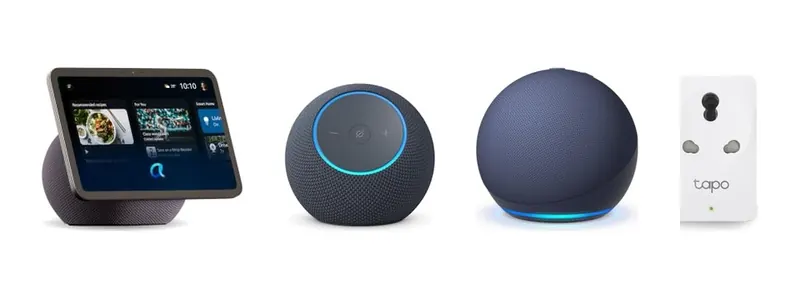
The speaker listens all the time, but only for the wake word, and that matching happens on the device. Nothing leaves the house until it hears “Alexa”; then the next few seconds of audio go to Amazon’s servers, which work out what you meant and send back a reply or a command. That is why a smart speaker can do very little when the internet is down. Alexa+ adds a large language model on those servers, which is what lets it follow a casual, half-finished sentence instead of a fixed phrase.
Wi-Fi, Bluetooth, Zigbee and Thread
Four radios do the talking. Wi-Fi devices such as the WiZ bulb, Tapo plug and IR blaster connect straight to your router, which is simple but needs mains power and adds load to the router. Bluetooth is used mostly for setup and for streaming music from a phone. Zigbee and Thread are low-power mesh networks: each mains-powered device relays the signal to the next, and battery sensors can run for a year or more on a coin cell. Both need a hub (for Thread, a “border router”), which is what the Echo Dot Max and Echo Show 8 build in.
What Matter changes
Matter is a common standard backed by Amazon, Apple, Google and Samsung, so one Matter device can be controlled from Alexa, Google Home and Apple Home at the same time instead of being locked to one app. It runs over Wi-Fi or Thread. For buyers it mostly lowers risk: a Matter plug bought today keeps working if you later move from Alexa to another ecosystem. Many budget devices on Amazon.in are still not Matter-certified, so look for the Matter logo on the box if that flexibility matters to you.
How an IR blaster and an energy-monitoring plug work
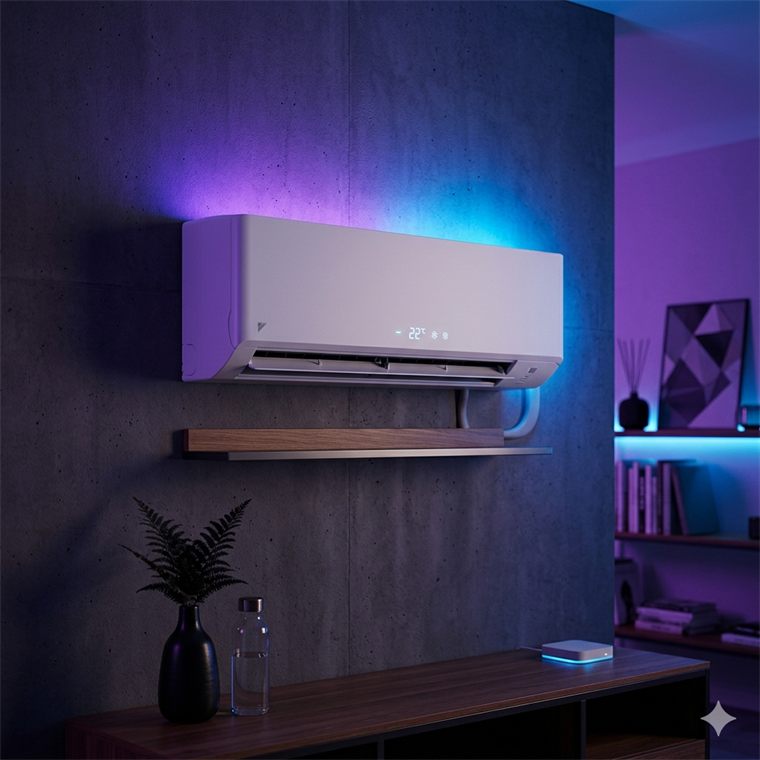
An IR blaster is a Wi-Fi-connected TV remote. It stores the infrared codes for your AC or TV and fires them across the room when Alexa asks, which is why it needs a clear line of sight and why it cannot tell whether the AC actually turned on. A smart plug is a relay with a current sensor: it switches the socket on and off and measures the power flowing through it, so the app can show consumption in kilowatt-hours. Multiply that by your electricity tariff per unit to see what the geyser really costs each month.