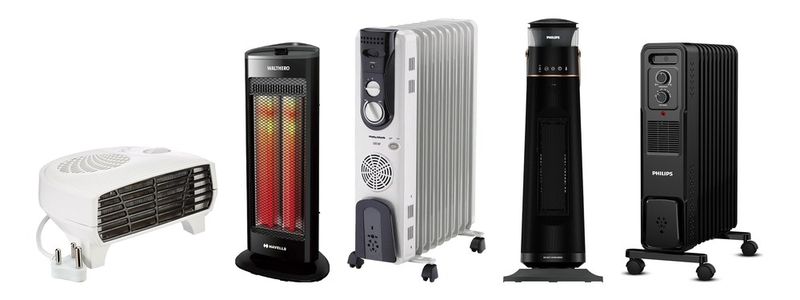
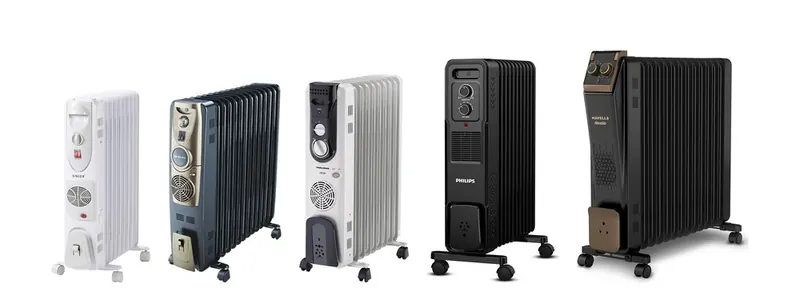
An oil-filled radiator is an electric heater with a reservoir of heat built in. Understanding how it stores and releases that heat explains both why it feels so comfortable and why it is slow.
The oil never burns and never needs topping up
Inside the bottom of the heater is an ordinary electric element, sealed in diathermic oil, a mineral oil chosen because it holds heat well and does not break down at high temperature. The element heats the oil, the oil circulates up through the hollow fins by convection, and the fins warm the room by radiation and by heating the air that rises past them. The oil is only a heat store: it is not fuel, it is never used up, and the heater is sealed for life. A leak, an oily smell or a gurgle that grows louder each year means the heater should be retired, not refilled.
Why it warms slowly and stays warm
Several litres of oil and many kilos of steel take time to heat, typically 20 to 30 minutes before a bedroom feels warm. The same mass keeps the fins radiating for a while after the thermostat cuts out, which is why the temperature feels steady rather than blowing hot and cold. A PTC fan bridges the slow start; the fins carry the long night.
What a night of heating really costs
An OFR turns every watt into heat, so the wattage tells you the cost. A heater drawing 2,000W uses 2 units an hour on full, about ₹16 at ₹8 a unit. You rarely pay that all night: once the room reaches the set temperature, the thermostat cycles the element off and on, and in a closed, reasonably insulated bedroom it often runs well under half the time. An eight-hour night commonly lands somewhere around ₹40 to ₹80, more in a draughty room or the hills. The cheapest settings are a closed door, a lower thermostat and heavy curtains, not a particular brand.
Reading the wattage on the box
Listings often add the oil element and the fan together: ‘2,900W’ usually means a 2,500W element plus a 400W PTC fan, and ‘2,400W’ a 2,000W element plus the fan. The heat steps below that tell you how gently it can run: a lowest step of 400W, as on the Philips, saves money on mild nights; one of 1,000W runs warmer. Either way, the total decides the socket: anything over about 1,400W needs 16A.