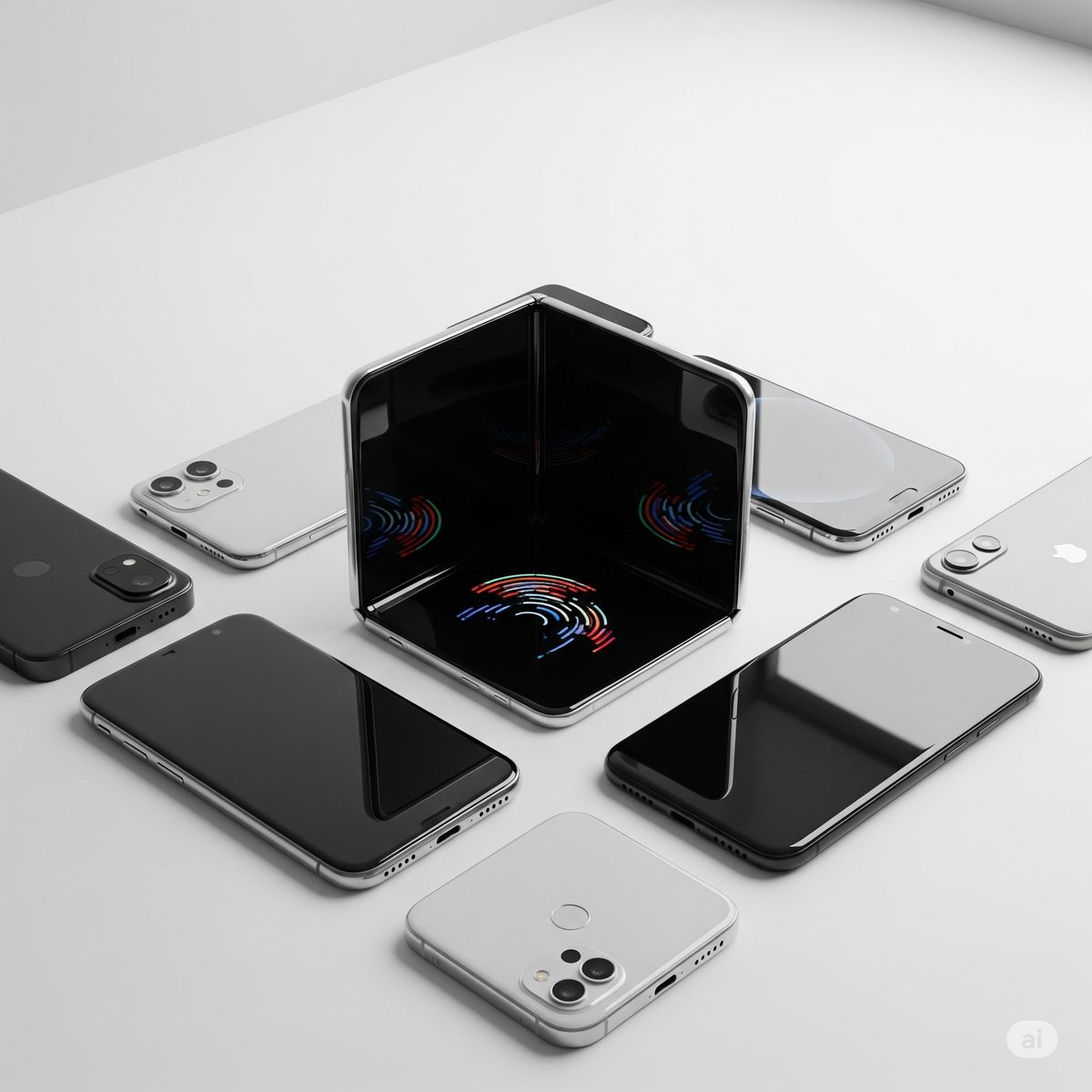
Foldables finally stopped asking you to compromise — and Apple has finally turned up. Nine of them ranked, from the brand-new iPhone Duo to a clamshell that costs less than a slab flagship, compared on crease, cover screen, battery and how they hold up after a year of folding.
For most of the last five years, buying a foldable meant accepting a list of trade-offs: a soft, easily marked screen, a visible crease down the middle, a battery that gave up by evening, and a camera a generation behind the maker's own slab flagship. In 2026 that list has quietly shrunk to one or two items. The newest book folds are thinner unfolded than a regular phone is thick — 4.1–4.5mm — and still find room for 4,800–5,000mAh. Clamshells have grown edge-to-edge cover screens that run full apps, so you spend less of the day opening the thing at all.
The other change is price. A foldable used to be a second phone for enthusiasts; now the entry point sits below what a conventional flagship costs, while the top of the market has stretched past ₹1.9 lakh for a book fold with a 200MP camera and an 8-inch inner display. That spread is why this guide covers nine devices rather than three — the right foldable depends far more on which shape suits your day than on which one is newest. If you'd rather not fold anything at all, our premium smartphone picks cover the conventional flagships these compete with.
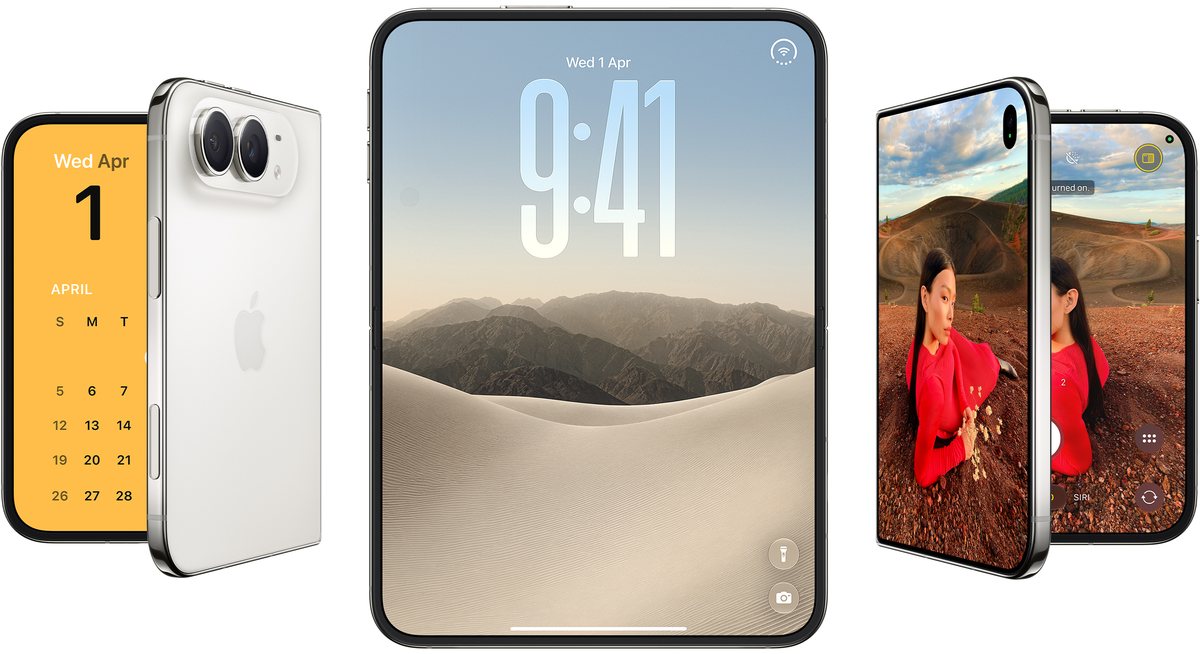
The newest arrival is also the most expensive here by a wide margin. Apple announced the iPhone Duo on 9 September 2026 — its first folding phone, and the first foldable of any make to claim a dust-tight IP68 rating rather than the IP48 everything else settles for. It reaches shops on 23 October at ₹2,99,900. We have put it first because it is the arrival that changes the category, not because it is the best value in it — that argument is still won further down this page.
Our Method
How we test & rank foldable phones
Every foldable here is scored on the five things that decide whether you keep using it after the novelty wears off: hinge and crease behaviour (how visible the fold line is under overhead light, and how flat the halves close), cover-screen usability — measured in inches and, more importantly, in how many tasks you can finish without opening the phone — main-display quality (peak brightness in nits, LTPO refresh range, aspect ratio), battery and charging in mAh and watts relative to screen area, and durability: the IP rating, the armour-aluminium frame, and how many years of OS updates the maker commits to. Cameras are weighted, but a foldable is judged first as a device you unfold fifty times a day.
Our rankings combine hands-on impressions, manufacturer specifications, independent lab measurements and thousands of verified owner reviews across marketplaces — with particular attention to complaints that surface at the 6–12 month mark, which is when hinge and inner-screen issues appear if they are going to. We recheck pricing and availability at each update, and a device is only listed if it is genuinely in stock at the price shown. Nopturnia earns an affiliate commission on qualifying purchases, but that never changes where a phone lands in these rankings.
Side-by-side
Foldable Phone Comparison 2026
Scroll right on smaller screens to see all columns.
*Apple does not publish a mAh figure for the iPhone Duo; 31 hours is its quoted video playback on the inner display, and 44 hours on the cover screen. It is the one device here we have not tested — it does not go on sale until 23 October.
In-Depth Reviews
Foldable Phone Reviews — All 9 Picks
Click through to buy at the listed price.
Just Announced01 / 09
Apple
Apple iPhone Duo
Not yet tested₹2,99,900
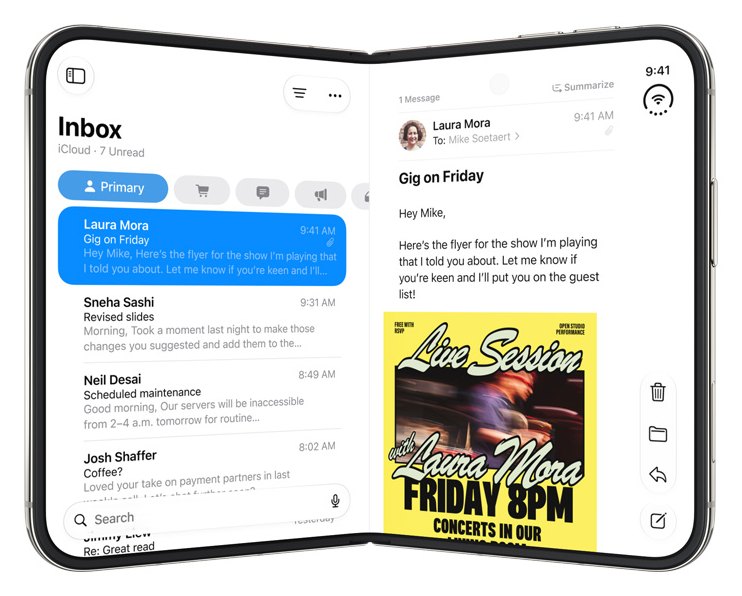
The first folding iPhone, and the first foldable of any make rated IP68 rather than IP48 — dust-tight, on a hinge that moves. It opens to a 7.6-inch display in a 5.2mm body, but costs ₹1,25,000 more than the Galaxy Z Fold8 and reaches shops on 23 October.
Main Display7.6″ 120Hz
Cover Display5.4″ 120Hz
ChipsetApple A20 Pro
Battery31h inner · 44h cover
5.2mm open and 254g, with two 48MP rear cameras and no telephoto
A nano-texture inner panel Apple says minimises the crease rather than removing it
Touch ID moves to the side button; there is no Face ID, and it is eSIM only
Pre-orders open at 5:30pm IST on 16 October; on sale 23 October in Star White and Night Sky. The Duo is not stocked on Amazon, so this link goes to Apple India and earns us nothing — and its ranking here reflects Apple's published specifications, not our own testing.
Two generations old and all the better for your wallet: the cheapest way into a Samsung clamshell, and the only phone here pairing Snapdragon 8 Gen 3 with 12GB and 256GB under ₹70,000. The 3.4-inch cover screen is small by 2026 standards.
Main Display6.7″ 120Hz
Cover Display3.4″ AMOLED
ChipsetSnapdragon 8 Gen 3
Battery4,000mAh · 25W
The hinge, IP48 rating and armour-aluminium frame the newer Flips inherited
Seven years of OS and security updates, same as the current models
50MP main plus 12MP ultrawide, and 15W wireless charging
Samsung's "Fan Edition" foldable: the Flip6 body, screens and cameras carried over, running an Exynos 2400 with a fresh seven-year software clock. Buy it for the longest software runway at the least money, if you don't mind the older cover screen.
Main Display6.7″ 120Hz
Cover Display3.4″ AMOLED
ChipsetExynos 2400
Battery4,000mAh · 25W
The cheapest brand-new Samsung foldable, with Galaxy AI intact
Same 50MP main and 12MP ultrawide as the Flip6 — imaging is unchanged
128GB base and no microSD slot; step up if you shoot video
Where the clamshell grew up: a 4.1-inch edge-to-edge cover display that runs full apps rather than widgets, a 6.9-inch LTPO inner screen, and a battery that finally gets a flip through a full day. With the Flip8 on shelves it has settled well below its successor.
Main Display6.9″ LTPO 120Hz
Cover Display4.1″ edge-to-edge
ChipsetExynos 2500
Battery4,300mAh · 25W
4,300mAh, and the cover screen wraps the cameras for maps, replies and payments
12GB/256GB with 15W wireless charging, at ₹97,999
Cameras carry over from the Flip6: the upgrade is screen and battery
A full 8-inch book fold for roughly what a clamshell costs. The 6.53-inch cover screen is a normal phone in its own right, and it runs 2024's Snapdragon 8 Gen 3 — which is exactly why it costs ₹60,000 less than the Fold8.
Main Display8.03″ LTPO 120Hz
Cover Display6.53″ 120Hz
ChipsetSnapdragon 8 Gen 3
Battery5,700mAh · 100W
5,700mAh with 100W wired and 50W wireless, the fastest refill here
Zeiss 50MP main, 50MP ultrawide and a 64MP 3× periscope telephoto
16GB/512GB standard, though 236g makes it the heaviest pick here
The best clamshell you can buy, and the thinnest and lightest Flip Samsung has made — lighter than several ordinary flagships. The screens carry over from the Flip7, so the upgrade is in the silicon and the frame: Exynos 2600 in India, Snapdragon 8 Elite Gen 5 elsewhere.
Main Display6.9″ LTPO 120Hz
Cover Display4.1″ 120Hz
ChipsetExynos 2600
Battery4,300mAh · 25W
180g and 6.1mm unfolded, the slimmest folding phone here when open
Dual Recording captures both cameras at once; My FanCam auto-frames on the cover
Android 17 with One UI 9 and seven OS updates counted from there
The endurance champion. vivo fits a 6,000mAh cell into a 217g body — more capacity than the Fold8 Ultra in a lighter phone. The 8.03-inch inner display is the largest here alongside the X Fold3 Pro, with four OS upgrades and five years of security patches promised.
Main Display8.03″ LTPO 120Hz
Cover Display6.53″ LTPO
ChipsetSnapdragon 8 Gen 3
Battery6,000mAh · 80W
Folds to 9.2mm — the best size-to-stamina ratio of any foldable here
Triple 50MP Zeiss with a 3× periscope, plus dual 20MP selfie cameras
80W wired and 40W wireless: no other foldable in this guide gets close
The most complete book fold on sale. At 201g and 4.5mm unfolded it has stopped feeling like a compromise device, and Snapdragon 8 Elite Gen 5 keeps it comfortably ahead of anything else at this size. The one honest caveat: there is no telephoto lens.
Main Display7.6″ LTPO 120Hz
Cover Display5.5″ 120Hz
ChipsetSnapdragon 8 Elite Gen 5
Battery4,800mAh · 45W
The 7.6-inch LTPO is the best folding display Samsung ships outside the Ultra
50MP wide plus 50MP ultrawide; zoom is where the Ultra earns its premium
45W wired, 20W wireless, IP48 sealing and seven years of OS updates
The no-compromise foldable, priced like it. The first Fold with Samsung's 200MP main sensor, it adds the 3× telephoto the standard Fold8 goes without and stretches the inner display to a genuine 8 inches. Buy it for reach and screen, or save ₹20,000 and take the Fold8.
Main Display8.0″ LTPO 120Hz
Cover Display6.5″ 120Hz
Rear Cameras200MP + 50MP + 10MP
Battery5,000mAh · 45W
A 6.5-inch cover screen that behaves like an ordinary phone
4.1mm unfolded and 8.9mm closed at 215g, Samsung's thinnest foldable to date
Snapdragon 8 Elite Gen 5, up to 16GB and 1TB, on One UI 9
Decide the shape before the brand. A book fold gives you a 7.6–8.0″ tablet for documents, split-screen and reading; a flip gives you a normal phone that halves in your pocket. Everything else — price, weight, camera — follows from that one choice.
02
Cover Screen Size
On a flip this is the difference between a widget panel and a usable phone: 3.4″ handles notifications, 4.1″ runs full apps. On a book fold, a 6.5″ cover (Fold8 Ultra, vivo) is a phone in its own right, while a narrow 5.5″ one nudges you to open the device more often.
03
Crease & Hinge
Every foldable still has a crease; the question is whether you see it in normal use or only under raking light. Newer teardrop hinges close fully flat with no gap, which keeps grit off the inner panel — the single biggest predictor of long-term screen health.
04
IP Rating — Read the Second Digit
Most foldables here are IP48: fully protected against submersion, but the "4" means only objects larger than 1mm are kept out. Fine dust and sand can still reach the hinge, so beach and building-site use remains the weak spot. The iPhone Duo is the first to claim a dust-tight IP68 — untested, but the number to watch.
05
Battery vs Screen Area
Judge capacity against how much glass it has to light. 4,000mAh is fine behind a 6.7″ flip panel; an 8″ fold wants 5,000mAh or more. vivo's 6,000mAh in a 217g body is the outlier — Samsung's folds trade capacity for thinness.
06
Software Years & Service
A foldable is a long-hold purchase, so update length matters more than usual: Samsung commits to seven OS versions, vivo to four plus five years of security patches. Check that your city has an authorised service centre — an inner-screen replacement is not a third-party repair.
Explained
Types of foldable phones
"Foldable" is a category with at least five distinct shapes inside it, and they solve different problems. What separates them is the fold axis (across the middle or down the spine), the size of the cover screen, and whether the maker is chasing thinness, battery or camera reach. Here is how the types compare.
01
Book-style folds
Fold down the spine like a passport, opening a 7.6–8.0″ near-square tablet. Best for spreadsheets, PDFs, split-screen multitasking and reading — and the only type that genuinely replaces a small tablet. Heaviest and most expensive.
02
Flip / clamshell
Fold across the middle, halving a normal 6.7–6.9″ phone into something that fits a jacket pocket. No extra screen area when open — you are buying portability, the hands-free camera angle and, increasingly, a cover screen that runs apps.
03
Cover-screen-first flips
The newer clamshells whose outer display wraps around the cameras and spans the full lid — 4.1″ and up. They change how the phone is used: you answer, navigate, pay and shoot without ever opening it, which also saves battery.
04
FE & value foldables
Fan-edition and outgoing-generation models that reuse a proven chassis, hinge and camera with a mid-tier chipset or last year's flagship silicon. The cheapest honest way in — you give up cover-screen size and a little speed, not durability.
05
Ultra / camera-first folds
Flagship folds that add what the standard model drops — a periscope or telephoto lens, a 200MP sensor, the largest inner panel. They carry a ₹20,000–40,000 premium and only make sense if zoom photography is a real part of your week.
06
Tri-folds & rollables
Two-hinge designs that open to roughly 10″, and rollable prototypes that extend a single panel. Real but very limited in distribution and priced well above everything here — worth watching, not worth waiting for if you need a phone now.
Under the Hood
How foldable phone technology works
A folding phone is an ordinary OLED panel that has been re-engineered to survive being bent a few hundred thousand times, wrapped around a hinge that has to hold any angle and close without trapping dust. Knowing how those parts work makes the spec sheets far easier to read — and explains most of the trade-offs in this guide.
The panel: plastic OLED under ultra-thin glass
The inner display is a plastic OLED (P-OLED) rather than the glass-backed panel in a normal phone, because polyimide can flex where glass cannot. Over it sits ultra-thin glass — real glass, drawn to around 30 microns — plus a soft protective laminate you must never peel off. That laminate is why the inner screen feels slightly tacky and marks more easily than the cover screen: it is doing the job a hard glass layer normally would.
The hinge: why the crease shrank
Early foldables used a simple U-bend, which forced a tight radius and left a visible valley. Current designs use a teardrop (water-drop) hinge: the panel tucks into a droplet-shaped cavity inside the spine, so the bend radius is larger and the two halves close completely flat. Bigger radius means a shallower crease and less stress per fold — and a gapless close keeps grit off the panel, which matters more for lifespan than the crease ever does.
Sealing, dust and what IP48 really means
The first digit of an IP rating covers solids, the second liquids. IP48 therefore means full protection against prolonged submersion but only against objects above 1mm — makers have until now not managed to seal a moving hinge against fine dust. Practically: rain, spills and pool drops are fine; a sandy beach or a workshop is where foldables still fail, and where a case with a covered spine earns its keep. Apple’s iPhone Duo is the first to claim IP68 — the 6 meaning dust-tight — which would close that gap entirely if independent testing bears it out.
Reading the rest of the spec sheet
Two numbers do most of the work. Unfolded thickness tells you how the phone feels in the hand — 4.1–4.5mm is the current state of the art, and anything under 6mm open is genuinely slab-like. Battery per screen inch tells you what to expect from a day: 4,000mAh behind a 6.7″ flip is comfortable, while an 8″ fold needs 5,000mAh+ to match it. Charging speed matters more on foldables than slabs, because the thin halves limit cell size — which is why vivo's 80–100W refills offset its bigger panels.
Our Recommendation
The best foldable you can buy is the Samsung Galaxy Z Fold8
If we had to pick just one: the Galaxy Z Fold8 at ₹1,74,999 is the first book fold that gives up nothing you would notice day to day — 201g, 4.5mm unfolded, the best folding panel outside the Ultra, Snapdragon 8 Elite Gen 5 and seven years of updates. Its only real gap is the missing telephoto. But every foldable in this guide wins its own category:
› First fold for iPhone owners: Apple iPhone Duo — the only way onto a folding phone without leaving iOS
› Tightest budget: Galaxy Z Flip6 — Snapdragon 8 Gen 3 and 12GB/256GB at ₹69,999
› First foldable: Galaxy Z Flip7 FE — the newest software clock for the least money
› Best flip value: Galaxy Z Flip7 — the 4.1″ cover screen for ₹22,000 less than the Flip8
› Big screen on a budget: vivo X Fold3 Pro — an 8″ fold with a 64MP periscope for clamshell money
› Best clamshell: Galaxy Z Flip8 — 180g, 6.1mm and the longest support window here
› Best battery: vivo X Fold5 — 6,000mAh with 80W wired and 40W wireless
› Best cameras: Galaxy Z Fold8 Ultra — 200MP main plus the 3× telephoto the Fold8 lacks
The Duo is the one exception to our in-stock rule: it does not ship until 23 October, so it is listed on Apple's published specifications and price rather than on our testing, and we will score it properly once we have used one. If you are on Android, it changes nothing — it runs iOS and costs ₹1,25,000 more than the Fold8.
Yes, with one caveat. Current hinges are rated for around 200,000 folds — roughly 100 folds a day for five years — and every Android foldable in this guide is IP48, meaning it survives full submersion. The remaining weakness is fine dust: the "4" in IP48 only blocks particles above 1mm, so sand and grit can still work into the hinge. The inner screen also keeps its soft protective laminate, which marks more easily than normal glass and must never be peeled off.
Buy a book fold if you want more screen than a phone gives you — documents, spreadsheets, split-screen work, reading and video on a 7.6–8.0-inch panel. Buy a flip if you want the same screen you already have in half the pocket space, plus the hands-free camera angle and a cover display that handles quick tasks. Folds cost more and weigh 200–236g; flips start around ₹69,999 and weigh under 190g.
There is still a crease on every folding phone sold today, but teardrop hinges have made it much shallower — you feel it under a fingertip and see it when light rakes across the screen at an angle, not when you are looking at content head-on. No manufacturer has eliminated it, so treat any claim of a "creaseless" foldable with suspicion.
Flips do run shorter than slab phones, because a 4,000–4,300mAh cell has to be split across two thin halves — though a large cover screen claws much of that back by keeping the main panel off. Book folds are competitive: 4,800–5,000mAh on the Samsung folds, and 6,000mAh on the vivo X Fold5, which outlasts most conventional flagships despite an 8-inch display.
Not on the inner screen. The factory laminate is part of the display stack — peeling it off or adding tempered glass over it will damage the panel. Cover screens take normal protectors. Cases are model-specific two-piece designs that clip to each half; avoid anything that bridges the hinge or adds bulk near the spine, since that puts stress on the fold.
Five shapes matter today: book-style folds that open to a 7.6–8.0-inch tablet; flip clamshells that halve a normal phone; cover-screen-first flips with a 4.1-inch-plus outer display that runs full apps; FE and outgoing-generation value foldables; and camera-first Ultra folds that add a telephoto the standard model omits. Tri-folds and rollables exist but remain limited-distribution showcases. See the Types of foldable phones section above for the full breakdown.
Close, but zoom is where the gap shows. Thin folding halves leave little depth for a periscope module, so the standard Galaxy Z Fold8 ships with 50MP wide and 50MP ultrawide and no telephoto at all. If reach matters, the Fold8 Ultra's 200MP main plus 3× telephoto or vivo's 64MP periscope on the X Fold3 Pro are the ones to look at — otherwise a conventional flagship still gives you more lens for the money.
Owner reports on the last three generations suggest the hinge itself rarely fails first — screen laminate wear along the crease and dust ingress are the more common complaints, and both usually appear after the first year rather than in the first months. Keep the phone out of sandy environments, close it before pocketing it, and budget for the fact that an inner-panel replacement is an authorised-service-centre job, not a corner-shop repair.
Often yes — foldables depreciate faster than slab flagships, and hinge design changes slowly. The Galaxy Z Flip7 costs about ₹22,000 less than the Flip8 while sharing its screen sizes and cameras, and the Flip6 sits ₹50,000 below with the same IP rating and update promise. The two things you actually lose are chipset generation and remaining software years, so check how many OS updates are left before buying an older model.
Only if you are already on an iPhone. Apple announced the iPhone Duo on 9 September 2026: a 7.6-inch inner display, a 5.4-inch cover screen, the A20 Pro chip and a 5.2mm body, with pre-orders on 16 October and sale from 23 October at ₹2,99,900 for 256GB, rising to ₹4,49,900 for 2TB. That is ₹1,25,000 more than the Galaxy Z Fold8, for two 48MP cameras and no telephoto, no Face ID, and eSIM only. Its one genuine advance is an IP68 rating — dust-tight, where every Android fold is IP48 — which nobody has independently tested yet. For iPhone owners it is the first fold that does not mean switching platforms, so it is worth the six-week wait. For everyone else it is not.
All the smartphones we track, in one place
Live prices, discounts and 90-day price history across the full catalogue — search it, filter it by price and spec, and save what you're watching.



 Apple
Apple