
Buying Guide

Best Flagship Phones Over ₹1 Lakh
2026 Edition · India

The phones where the spec sheet stops being the point. Ten flagships above ₹1,00,000 — from the ₹1,01,900 iPhone Air to the ₹1,74,999 Galaxy Z Fold8 — ranked on camera hardware, sustained performance, display and how long they will keep getting updates.

Nopturnia Editorial
19 min read India 10 picks
Best flagship phones over 1 lakh in India 2026 — iPhone 17 Pro Max, Galaxy S26 Ultra and more

Overview

What an extra lakh actually buys you in 2026

Somewhere around ₹60,000, the phone market solved the basics. Chips are fast enough, screens are bright enough, and batteries last the day. That makes the six-figure tier a harder sell than it used to be — and also a more interesting one, because the money now goes almost entirely into things software cannot fake: sensor area, optical reach, folding glass, thermal headroom, and the length of the update window.

This guide covers ten flagships currently selling above ₹1,00,000 on Amazon India, spanning ₹1,01,900 to ₹1,74,999. Two of them fold. Three are built primarily around a camera system — a 1-inch Leica sensor, a true 230mm periscope, a 200MP APO telephoto — and the rest are all-rounders that ask you to give up nothing in particular. We have grouped them by what they are actually for, because at this price the right answer depends far more on how you use a phone than on which one wins a benchmark.

Our Method

How we test & rank flagship phones

Every phone here is scored on the five things that separate a great flagship from an expensive one: camera hardware (sensor size in inches, optical zoom in mm, stabilisation), sustained performance rather than peak benchmark scores, display quality (peak nits, resolution, LTPO refresh range), battery and charging (capacity in mAh against charging wattage), and software support length in years. We weight the specs you feel after six months — thermal throttling, update cadence, hinge durability — over the ones that win launch-day headlines.

Our rankings combine hands-on impressions, manufacturer specifications and thousands of verified owner reviews across marketplaces. Prices on this page are the live Amazon.in listing price read at publication and rechecked at each update; they exclude bank, exchange and no-cost-EMI offers, which in this tier are often worth another ₹5,000–₹10,000. Nopturnia earns an affiliate commission on qualifying purchases, but that never changes where a phone lands in these rankings.

Side-by-side

Flagship Phone Comparison 2026

Scroll right on smaller screens to see all columns.

Model Price Chip Headline Camera Standout Rating Buy
iPhone Air
iPhone Air
Best Design
₹1,01,900 A19 Pro6.5" 120Hz5.6mm 4.5 Amazon
Pixel 10 Pro XL
Pixel 10 Pro XL
Best AI & Software
₹1,04,999 Tensor G550+48+48MP7 years 4.6 Amazon
vivo X300 Pro
vivo X300 Pro
Best Telephoto
₹1,19,999 Dimensity 9500200MP ZEISS APO20× macro 4.6 Amazon
Galaxy S26 Ultra
Galaxy S26 Ultra
Best Android
₹1,24,999 SD 8 Elite Gen 5200MP quad5000mAh 4.8 Amazon
Xiaomi 17 Ultra
Xiaomi 17 Ultra
Best Camera
₹1,39,998 SD 8 Elite Gen 51" Leica LOFIC90W 4.7 Amazon
iPhone 17 Pro Max
iPhone 17 Pro Max
Best Overall
₹1,43,990 A19 ProPro Fusion tripleBest-ever 4.8 Amazon
iPhone 17 Pro
iPhone 17 Pro
Best Compact Pro
₹1,50,900 A19 ProAll-48MP Pro Fusion6.3" body 4.7 Amazon
Pixel 10 Pro Fold
Pixel 10 Pro Fold
Best Foldable Value
₹1,58,499 Tensor G58" inner OLED7 years 4.6 Amazon
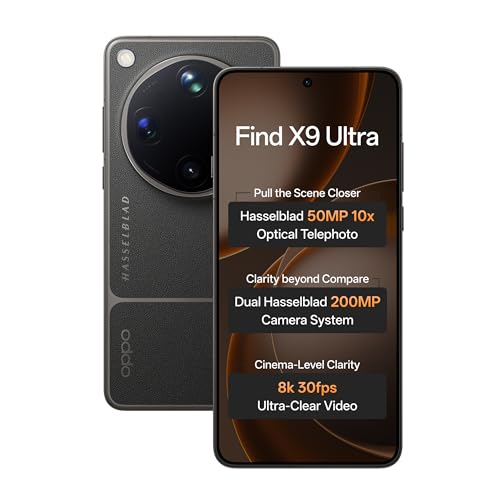
Oppo Find X9 Ultra
Oppo Find X9 Ultra
Best Zoom Range
₹1,69,999 SD 8 Elite Gen 5Dual 200MP7050mAh 4.7 Amazon
Galaxy Z Fold8
Galaxy Z Fold8
Best Foldable
₹1,74,999 SD 8 Elite Gen 5Dual 50MP4800mAh 4.7 Amazon

In-Depth Reviews

Flagship Phone Reviews — All 10 Picks

Ordered by price. Click Amazon to buy at the listed price.

Best Design 01 / 10
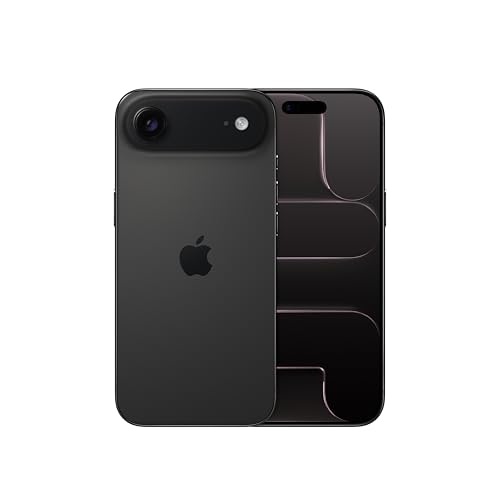
Apple iPhone Air 256GB — the thinnest iPhone ever, in Space Black Apple

Apple iPhone Air (256GB)

4.5 / 5 ₹1,01,900

The entry ticket to the six-figure club, and the most distinctive object in it. At 5.6mm the Air is thinner than a stack of two credit cards, wrapped in an ultralight titanium frame with Ceramic Shield front and back — yet it runs the same A19 Pro silicon as the Pro models. You trade the telephoto lens and some battery headroom for a phone that genuinely disappears in a pocket. If you want flagship polish and iOS longevity without a camera bump the size of a coin, this is it.

ChipA19 Pro
Display6.5" 120Hz
Thickness5.6mm
BuildTitanium
  • Ultralight titanium frame with Ceramic Shield on both front and back
  • Same A19 Pro chip as the Pro line — no performance tier below the flagships
  • Center Stage front camera keeps you framed on video calls automatically
Best AI & Software 02 / 10
Google Pixel 10 Pro XL 5G in Moonstone with 16GB RAM and 256GB storage Google

Google Pixel 10 Pro XL (16GB / 256GB)

4.6 / 5 ₹1,04,999

The cheapest way into this tier and the one that will still feel current in 2032. Google's Tensor G5 is not the fastest chip here on paper, but it is the one purpose-built for the on-device Gemini features — call summaries, Magic Editor, live translation — that actually change how you use a phone. The 5× telephoto and 42MP selfie camera are the best-tuned in the lineup for people who just point and shoot, and seven years of OS and security updates is the longest commitment on this page.

ChipTensor G5
Rear Camera50 + 48 + 48MP
Selfie42MP
Updates7 years
  • Pro triple camera: 50MP wide, 48MP ultrawide with macro, 48MP 5× telephoto
  • On-device Gemini handles summaries, editing and translation without a round trip
  • 16GB RAM keeps a dozen apps and an AI model resident at once
Best Telephoto 03 / 10
vivo X300 Pro 5G in Elite Black with ZEISS APO telephoto camera system vivo

vivo X300 Pro 5G (16GB / 512GB)

4.6 / 5 ₹1,19,999

Buy this one for the long lens. The 200MP ZEISS APO telephoto sits on a 1/1.4" sensor — larger than the main camera on most phones — and it is APO-certified, meaning chromatic aberration is corrected rather than smeared over in software. It focuses close enough for 20× telephoto macro, which is a genuinely different way to shoot. The 50MP main camera adds a 1.5° gimbal stabiliser rated CIPA 5.5, so handheld night video holds together where rivals wobble.

Telephoto200MP ZEISS APO
Main50MP Gimbal OIS
Ultra-Wide50MP
Storage16GB / 512GB
  • 200MP APO telephoto on a 1/1.4" sensor with up to 20× telephoto macro
  • 1.5° gimbal OIS (CIPA 5.5) on the main camera steadies handheld night video
  • ZEISS colour science and T* coating cut flare on backlit shots
Best Android 04 / 10
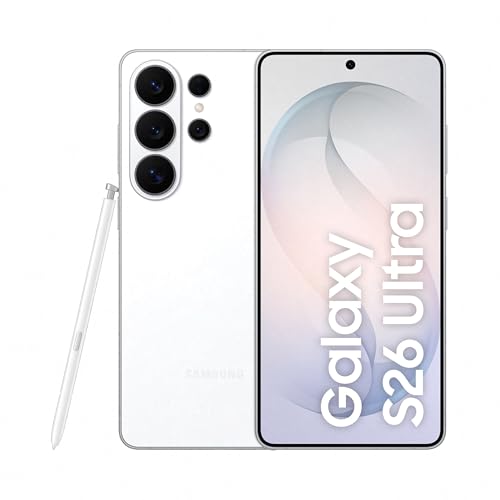
Samsung Galaxy S26 Ultra 5G in White with 200MP camera and built-in Privacy Display Samsung

Samsung Galaxy S26 Ultra 5G (12GB / 256GB)

4.8 / 5 ₹1,24,999

The complete Android flagship, and the one to buy if you want a phone that does everything rather than one thing brilliantly. Snapdragon 8 Elite Gen 5, a 200MP main sensor, a 5000mAh battery and the S Pen ecosystem all land in one titanium body. The headline addition this generation is the built-in Privacy Display — a switchable layer that narrows the viewing angle on demand, which is the first genuinely useful hardware privacy feature on a phone. Knox security and Samsung's long update policy do the rest.

ChipSnapdragon 8 Elite Gen 5
Camera200MP Quad
Battery5000mAh
DisplayPrivacy Display
  • Switchable Privacy Display narrows the viewing angle on demand
  • 200MP main sensor with Photo Assist and Creative Studio editing built in
  • Defence-grade Knox security with on-device processing for AI features
Best Camera 05 / 10
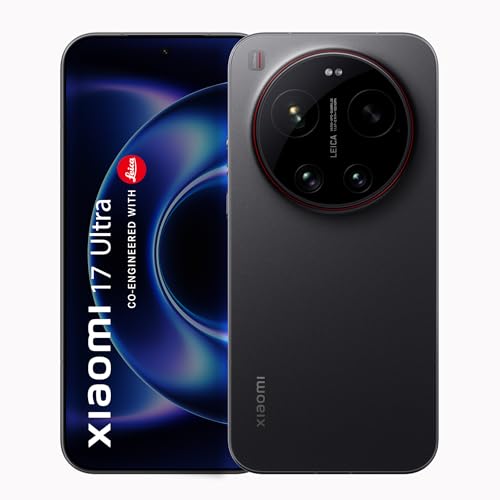
Xiaomi 17 Ultra in Black with the Leica 1-inch LOFIC main camera sensor Xiaomi

Xiaomi 17 Ultra (16GB / 512GB)

4.7 / 5 ₹1,39,998

The most serious camera phone on this page. Xiaomi is first to ship a 1-inch Leica sensor with LOFIC (Lateral Overflow Integration Capacitor) pixels, which hold far more charge before clipping — the practical effect is highlight detail that survives scenes where every other phone blows out the sky or a streetlight. Pair that with Leica's colour science, a 2K AMOLED panel and 90W HyperCharge, and you have a phone built for people who shoot first and check specs later. It is heavy, and that is the trade.

Main Camera1" Leica LOFIC
ChipSnapdragon 8 Elite Gen 5
Display2K AMOLED
Charging90W HyperCharge
  • World's first 1-inch Leica LOFIC sensor — far more headroom before highlights clip
  • Leica colour science with Authentic and Vibrant profiles baked into the pipeline
  • 90W HyperCharge refills the battery over a short break, not overnight
Best Overall 06 / 10
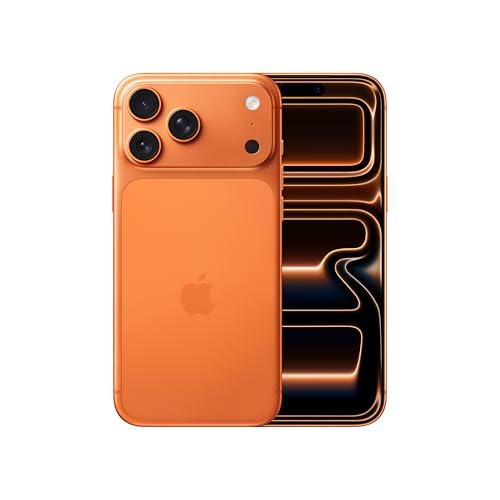
Apple iPhone 17 Pro Max 256GB in Cosmic Orange with the Pro Fusion camera system Apple

Apple iPhone 17 Pro Max (256GB)

4.8 / 5 ₹1,43,990

If you want the fewest compromises, this is the phone. The heat-forged aluminium unibody is a real engineering change rather than a finish swap — it moves heat away from the A19 Pro far better than the old titanium frame, so sustained performance in games and long 4K takes no longer falls off a cliff. Apple rates it for the best battery life of any iPhone ever, the Pro Fusion camera system is still the reference for video, and Ceramic Shield 2 makes it the most durable iPhone yet. The price is the only thing to argue with.

ChipA19 Pro
Display6.9" 120Hz ProMotion
CameraPro Fusion Triple
BuildAluminium Unibody
  • Heat-forged aluminium unibody holds peak performance far longer under load
  • Ceramic Shield 2 front and rear — 4× more crack-resistant on the back
  • The longest battery life Apple has ever shipped in an iPhone
Best Compact Pro 07 / 10
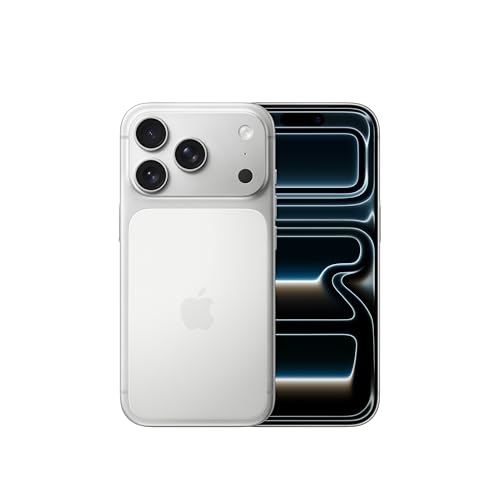
Apple iPhone 17 Pro 512GB in Silver with the Pro Fusion camera system Apple

Apple iPhone 17 Pro (512GB)

4.7 / 5 ₹1,50,900

Everything that makes the Pro Max the pick of the year, in a phone you can actually reach across one-handed. Same A19 Pro, same heat-forged aluminium unibody, same Pro Fusion camera system with all-48MP rear cameras and 8× framing — the only meaningful concession is a smaller battery, and this generation's efficiency gains have narrowed that gap considerably. At 512GB it undercuts the equivalent Pro Max by a useful margin. If the 6.9" Max has always felt like too much phone, buy this instead.

ChipA19 Pro
Display6.3" 120Hz ProMotion
CameraAll-48MP Pro Fusion
Storage512GB
  • Identical A19 Pro silicon and camera system to the Pro Max in a 6.3" body
  • All three rear cameras are 48MP — no resolution drop when you switch lenses
  • Ceramic Shield 2 front with 3× better scratch resistance
Best Foldable Value 08 / 10
Google Pixel 10 Pro Fold in Moonstone with a 6.4-inch cover screen and 8-inch inner display Google

Google Pixel 10 Pro Fold (16GB / 256GB)

4.6 / 5 ₹1,58,499

The thinking person's foldable, and ₹16,500 cheaper than the Z Fold8. The 8-inch inner panel is the largest here, the 6.4-inch cover screen is a usable phone in its own right, and because it is a Pixel you get the same on-device Gemini stack and seven-year update commitment as the Pro XL — the longest support window of any foldable on sale. Tensor G5 is not the fastest chip in this company, and the Moonstone finish is a fingerprint magnet, but no rival fold matches this combination of screen area and software life.

Inner Display8" OLED
Cover Display6.4" OLED
ChipTensor G5
Updates7 years
  • Largest inner display of any foldable here at a full 8 inches
  • Seven years of OS and security updates — unmatched among foldables
  • 16GB RAM keeps multi-window layouts and an on-device model resident together
Best Zoom Range 09 / 10
Oppo Find X9 Ultra 5G in Tundra Umber with the Hasselblad 10x optical zoom telephoto OPPO

Oppo Find X9 Ultra 5G (12GB / 512GB)

4.7 / 5 ₹1,69,999

Nothing else here reaches this far optically. The Hasselblad 10× telephoto uses a quintuple-prism periscope to hit a true 230mm at f/3.5 — that is a proper sports and wildlife lens, not a crop dressed up as one. Two 200MP sensors handle the rest, 8K video is on tap, and a 7050mAh battery with 100W charging means the camera work does not cost you the evening. Hasselblad Master and XPAN modes are the closest a phone gets to shooting with intent.

TelephotoHasselblad 10× 230mm
SensorsDual 200MP
Battery7050mAh / 100W
Video8K
  • True 230mm f/3.5 optical reach via a quintuple-prism periscope, not a digital crop
  • Hasselblad Master Mode and XPAN panoramic mode with Natural Colour Solution
  • 7050mAh battery and 100W charging outlast every other flagship on this page
Best Foldable 10 / 10
Samsung Galaxy Z Fold8 5G in Lavender — the world's lightest book-style foldable Samsung

Samsung Galaxy Z Fold8 5G (12GB / 256GB)

4.7 / 5 ₹1,74,999

The Fold8 is where the book-style foldable finally stops feeling like a compromise. Samsung claims the world's lightest fold, and the new 10:16 content-native ratio is the real fix — short-form video fills the cover screen properly, and 4:3 opens out cinematically on the inner panel, so you stop seeing black bars everywhere. Flex Titanium Tech stiffens the hinge and flattens the crease. It is the most expensive phone here and the battery is the smallest, but nothing else turns into a tablet.

Form FactorBook Fold
ChipSnapdragon 8 Elite Gen 5
CameraDual 50MP
Battery4800mAh
  • 10:16 content-native ratio — short-form video and film both fill the screen
  • Flex Titanium Tech stiffens the hinge and flattens the display crease
  • Galaxy AI with Now Nudge and Photo Assist across both screens

Before You Buy

6 Things to Check

Sensor Size, Not Megapixels

A 1-inch sensor gathers roughly three times the light of a typical 1/1.5" flagship sensor, and that gap shows in every low-light frame. Megapixel counts are largely marketing above 50MP — check the sensor fraction instead.

Optical vs Digital Zoom

"100× zoom" is a crop. What matters is the longest optical focal length — 230mm on the Find X9 Ultra, roughly 120mm on a typical 5× periscope. Everything past that is upscaling.

Sustained Performance

Every chip here wins its first benchmark run. Ask instead what happens after twenty minutes — vapour chambers and, on the iPhone 17 Pro, an aluminium unibody are what stop frame rates collapsing under load.

Update Window

At this price you should expect the phone to stay current for five years or more. Google promises seven; Samsung is comparable; Apple has historically delivered six to eight. Chinese flagships typically commit to four or five.

Battery vs Charging Speed

A 7050mAh cell with 100W charging (Find X9 Ultra) and a 4800mAh cell with slower charging (Z Fold8) are different propositions entirely. Foldables always give up battery capacity to the hinge — budget for that.

The Real Price After Offers

Listed prices here exclude bank discounts, no-cost EMI and exchange. Flagships in this tier routinely carry ₹5,000–₹10,000 in card offers, and a recent trade-in can move the effective price a full tier down.

Explained

The five kinds of flagship at this price

Above ₹1 lakh, phones stop competing on the same axis and start specialising. Almost every model on this page is built around one defining trade — a bigger sensor, a folding panel, a thinner body — and understanding which category you are shopping in narrows ten options down to two or three very quickly.

The all-rounder Ultra

Big screen, big battery, best-available chip and a competent camera in every focal length. The Galaxy S26 Ultra and iPhone 17 Pro Max define this category — nothing is class-leading, nothing is a weakness.

The camera flagship

Built outward from the sensor, usually with a co-engineering badge — Leica on the Xiaomi 17 Ultra, Hasselblad on the Find X9 Ultra, ZEISS on the vivo X300 Pro. Heavier and thicker, and worth it only if you shoot a lot.

The book-style foldable

A phone-sized cover screen that opens into a small tablet. Best for reading, multitasking and long-form video — the Galaxy Z Fold8 and Pixel 10 Pro Fold. You pay in battery capacity, thickness and price.

The AI-first phone

Designed around on-device models rather than raw clock speed. The Pixel 10 Pro XL is the clearest example — Tensor G5 trails on benchmarks but runs Gemini features locally, and Google backs it with seven years of updates.

The thin-and-light flagship

A newer category: flagship silicon in a body built for feel rather than spec parity. The 5.6mm iPhone Air drops the telephoto and some battery to get there. Buy it for the object, not the feature list.

The compact Pro

Flagship internals in a 6.3" body for people who dislike the Max form factor. The iPhone 17 Pro is the clearest example — same chip and camera system as the Pro Max, with a smaller battery as the only real concession.

Under the Hood

How flagship phone hardware actually works

Four technologies do most of the work of justifying a six-figure price. Knowing how each one behaves makes the spec sheets on this page far easier to read — and makes it obvious which numbers are meaningful and which are decoration.

Sensor size and LOFIC pixels

A camera sensor's job is to collect photons, and a bigger sensor collects more. A 1-inch sensor (Xiaomi 17 Ultra) has roughly three times the area of a typical 1/1.5" flagship sensor, which buys real low-light detail and shallower natural depth of field. LOFIC — Lateral Overflow Integration Capacitor — adds a capacitor per pixel that catches overflow charge instead of clipping to white, so a single exposure holds highlight detail that would otherwise need HDR bracketing. Megapixel count above about 50MP mostly serves pixel-binning and cropping, not resolution.

Periscope telephoto lenses

A phone is too thin to fit a long lens front-to-back, so periscope modules turn the light path sideways with a prism and run the optics along the body. More prisms means more folded length: the Find X9 Ultra's quintuple-prism design reaches a true 230mm at f/3.5. APO certification, as on the vivo X300 Pro's 200MP telephoto, means the lens corrects chromatic aberration optically rather than leaving software to paint over purple fringing.

Sustained performance and thermals

Peak benchmark scores are set in the first ninety seconds, before a phone heats up. What you feel in a long gaming session or a 4K recording is sustained performance, governed by how fast heat leaves the chip. Vapour chambers are the usual answer; Apple's heat-forged aluminium unibody on the iPhone 17 Pro line is a structural one, using the whole frame as a heatsink. A phone that scores 10% lower but throttles 30% less is the faster phone in practice.

Foldable hinges and display layers

A folding panel is plastic-backed OLED under ultra-thin glass, bent around a multi-link hinge that distributes the fold radius so the display never creases sharply. Stiffer hinge materials — Samsung's Flex Titanium Tech — let the fold radius grow, which flattens the visible crease and reduces stress on the panel. The hinge assembly is also why foldables carry smaller batteries: it occupies volume a slab phone fills with cells.

Our Recommendation

The best all-rounder is the
Apple iPhone 17 Pro Max

If we had to pick one: at ₹1,43,990 the iPhone 17 Pro Max asks for the fewest compromises of anything here. The heat-forged aluminium unibody fixes the sustained-performance problem that dogged the titanium generation, the battery is the longest-lasting Apple has shipped, and the Pro Fusion camera system remains the reference for video. But every phone on this page wins its own category:

  • Best value in the tier: Pixel 10 Pro XL — seven years of updates at ₹1,04,999
  • Best Android all-rounder: Galaxy S26 Ultra — 200MP quad camera plus the Privacy Display
  • Best camera outright: Xiaomi 17 Ultra — the first 1-inch Leica LOFIC sensor
  • Best optical reach: Oppo Find X9 Ultra — a true 230mm Hasselblad periscope
  • Best portraits: vivo X300 Pro — 200MP ZEISS APO telephoto with gimbal OIS
  • Best foldable: Galaxy Z Fold8 — lightest book fold, 10:16 content-native screen
  • Best small flagship: iPhone 17 Pro — the Max experience in a 6.3" body
Buy Our Pick on Amazon

FAQ

Frequently Asked Questions

It depends entirely on which part of the phone you care about. Chips, screens and battery life have largely plateaued — a ₹60,000 phone in 2026 is fast, bright and lasts a day. What the six-figure tier still buys you is camera hardware that cannot be faked in software (1-inch sensors, true 10× periscopes, APO-corrected telephotos), materials and durability, and the longest software support windows. If photography, a folding screen or seven years of updates matter to you, the money is doing real work. If not, the tier below is excellent value.
For overall image quality the Xiaomi 17 Ultra leads, thanks to the first 1-inch Leica sensor with LOFIC pixels that hold highlight detail other phones clip away. For reach, the Oppo Find X9 Ultra's Hasselblad 10× periscope hits a true 230mm optically. The vivo X300 Pro's 200MP APO telephoto is the best portrait and telephoto-macro tool. For video, the iPhone 17 Pro Max is still the reference, and the Pixel 10 Pro XL is the most reliable point-and-shoot.
Buy a foldable if you regularly read, multitask or watch long-form content and want a tablet you can pocket. The Galaxy Z Fold8's 10:16 content-native ratio fixes the letterboxing that made earlier folds awkward, and it is the lightest book-style fold yet. The trade-offs are real though: a smaller 4800mAh battery than the bar phones here, a higher price, and cameras that trail the dedicated camera flagships. A crease-free slab is still the safer buy.
The Pixel 10 Pro XL leads with seven years of OS and security updates from launch. Samsung's flagship policy is comparable across the S26 Ultra and Z Fold8. Apple does not publish a fixed number but has historically supported iPhones for six to eight years of iOS releases. Xiaomi, vivo and Oppo commit to shorter windows, typically four to five years of OS upgrades — worth weighing if you keep phones for a long time.
In raw benchmarks the A19 Pro and Snapdragon 8 Elite Gen 5 trade places at the top, with the A19 Pro usually ahead on single-core and the Snapdragon competitive on multi-core and sustained GPU. Tensor G5 sits behind both on paper but is designed around on-device AI throughput rather than benchmark peaks. In practice all three are far faster than any app demands; sustained thermals and battery matter more than peak scores at this level.
No. Every price on this page is the live Amazon.in listing price at publication, before card discounts, no-cost EMI or exchange bonuses. Flagships in this tier routinely carry ₹5,000–₹10,000 in bank offers, and exchange values on a recent phone can be substantially more. Check the offer box on the product page before you order — the effective price is often a full tier lower than the sticker.
There is always a next model, but the release cadence in this tier is predictable: Samsung's Ultra lands in January–February, Apple's Pro Max in September, and the Chinese camera flagships between October and December. If you are within about two months of one of those windows, waiting usually gets you either the new model or a real discount on the current one. Outside that window, buying now costs you nothing.
LOFIC stands for Lateral Overflow Integration Capacitor. Each pixel gets an extra capacitor that catches charge overflowing from a bright area instead of letting it clip to pure white. The practical result is far more dynamic range in a single exposure — a sunset keeps colour in the sky, a night street scene keeps detail inside the streetlights. The Xiaomi 17 Ultra is the first phone to pair this with a full 1-inch sensor.
The Oppo Find X9 Ultra, on hardware alone — a 7050mAh cell with 100W charging is well beyond anything else here. The iPhone 17 Pro Max claims the longest runtime Apple has shipped, helped by the A19 Pro's efficiency and the new unibody's thermal behaviour. The Galaxy S26 Ultra's 5000mAh is dependable rather than exceptional, and the Z Fold8's 4800mAh is the smallest here because two screens and a hinge take the space.

Every smartphone we track, in one place

Live prices, discounts and 90-day price history across the full catalogue — search it, filter it by price and spec, and save what you're watching.

Browse all smartphones