Handheld vacuum spec sheets are unusually easy to misread, because the number printed largest — suction — is measured in a condition the vacuum never actually operates in. Understanding the mechanism makes the listings readable and explains why the biggest kPa figure is often not the best buy.
What kPa actually measures — and what it hides
Suction is quoted as sealed suction: block the inlet completely, then measure the pressure difference the motor can hold. That is a real number, but it describes the vacuum at the one moment no air is moving. The other half of the story is airflow, measured in litres per minute or CFM, which is what actually carries debris up the tube. A narrow crevice tool can have enormous sealed suction and still fail to lift sand, because nothing is flowing. Manufacturers print kPa because it is the bigger, friendlier number; treat it as an upper bound rather than a promise.
Cyclonic separation versus a bag and a filter
A bagged vacuum pushes all its air through the bag, so pickup drops steadily as the bag fills — by the time it is half full you may have lost a third of the performance. A cyclone spins the incoming air fast enough that heavy particles are thrown to the wall of the bin and fall out before the filter, so the filter stays clear and suction stays flat across the whole job. That is the mechanism behind “cyclonic technology” on the Eureka Forbes and AGARO picks, and it is the idea Dyson built its whole business on. It is not marketing, but it only helps with grit and hair — fine dust still reaches the filter.
Batteries: volts, amp-hours and why BLDC matters
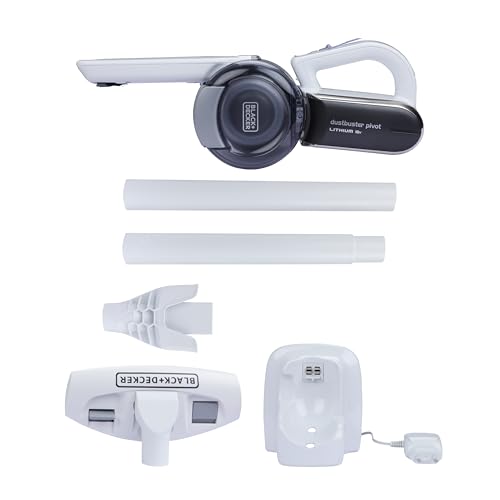
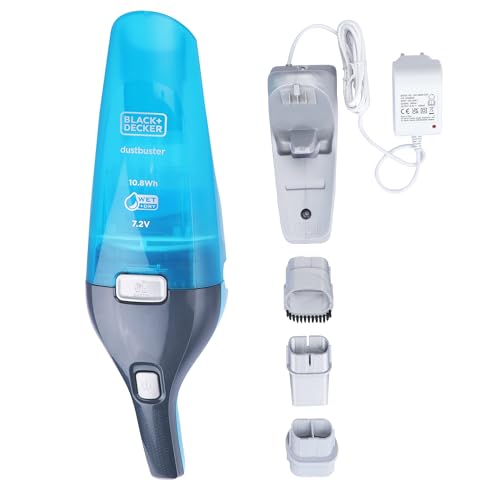
Two numbers describe a pack. Voltage sets how hard the motor can pull, so an 18V unit out-muscles a 7.2V one; amp-hours set how long it lasts, so 2.0Ah runs roughly twice as long as 1.0Ah at the same draw. A brushless BLDC motor converts more of that charge into airflow and has no brushes to wear out, which is why the newer picks reach 16–18 kPa from a small cell. Lithium packs also self-discharge slowly, so a hand vac left in a cupboard for two months still works — the old NiCd dustbusters did not.
HEPA, washable filters and the room you are cleaning into
A vacuum only removes dirt if it does not blow it back out. True HEPA media traps 99.97% of particles at 0.3 microns, which is the size range that carries dust-mite allergen and fine road dust. Handheld listings often say “HEPA-type”, which is not certified and can mean very little. What you can check is whether the filter is washable: a rinseable cartridge costs nothing over the life of the vacuum, where a disposable one quietly adds a few hundred rupees a year. Let it dry fully before refitting, or the damp media will restrict airflow and smell.