Mouse listings are full of numbers. Four of them decide how a mouse feels, and the biggest one usually matters least.
Optical vs laser sensors
Almost every mouse here uses an optical sensor: an LED lights the surface and a tiny camera compares thousands of images a second to work out how far you moved. It tracks precisely on cloth pads and matte desks. A laser sensor, as in the Dell Pro MS3220, picks up finer surface detail, so it copes better with glossy laminate, though gamers generally prefer optical for consistency. Neither works on clear glass; put a pad under it.
DPI, and why 12,800 is marketing
DPI (or CPI) is how many counts the sensor reports per inch of movement. A higher DPI moves the cursor further for the same hand movement, and that is all. Budget gaming mice reach headline figures like 12,800 DPI by interpolating, which adds no precision. What matters is whether the sensor tracks cleanly at the 400–1,600 DPI people actually use, without jitter or acceleration. A named PixArt sensor such as the 3327 or 3318 is a reliable sign that it does.
Polling rate: 125 Hz vs 1,000 Hz
Polling rate is how often the mouse reports its position to the PC. Basic office mice usually report at 125 Hz, once every 8 ms, which you will never notice in Excel. Gaming mice report at 1,000 Hz, once every millisecond, so the cursor looks smoother on a high-refresh monitor. Every gaming pick here runs at 1,000 Hz over its cable, with no wireless link to add delay.
Switches, click life and cables
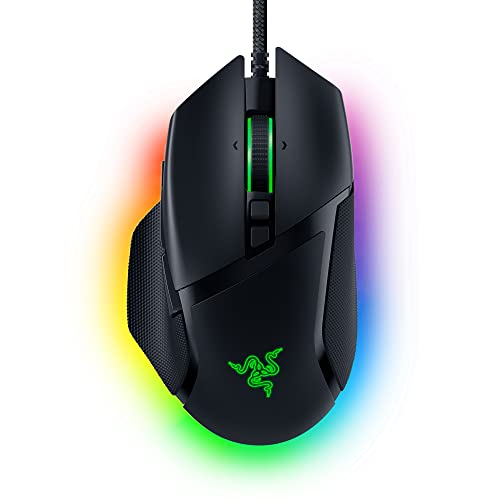
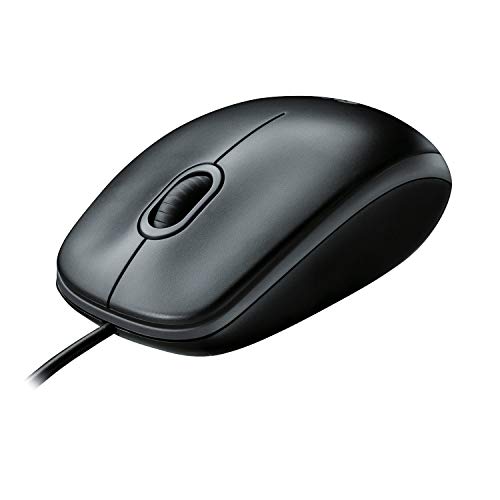
Each button sits on a small switch rated for a number of clicks: about 10 million is common at this price, and the TUF M3 Gen II claims 60 million. A rating is a guide, not a promise. A worn switch that double-clicks is the most common way a budget mouse dies. The cable matters too: a soft paracord cable, as on the Firestorm, drags less than a stiff rubber one, and a cheap mouse bungee fixes drag on any of them.