Buying Guide

Best Streaming Microphones
USB & XLR · Stream, Podcast, Record — India 2026

Your audience forgives bad video and leaves over bad audio. From a ₹805 first mic to the Shure MV7X broadcast standard — twelve USB and XLR microphones across FIFINE, MAONO, HyperX, Blue, Audio-Technica and Shure, ranked for real rooms.

Nopturnia Editorial
11 min read India 12 picks
Best Streaming Microphones in India 2026 — USB and XLR picks

Overview

Viewers forgive bad video. They leave over bad audio

Every creator learns this eventually: a slightly soft webcam image costs you nothing, but tinny, echoing, hissy audio makes people close the tab in seconds. A dedicated microphone is the single highest-impact upgrade in any streaming setup — bigger than the camera, bigger than the lights — because it fixes the thing your audience actually cannot tolerate. And in 2026 the entry price is astonishingly low.

This guide ranks twelve microphones from ₹805 to ₹18,699 across plug-and-play USB mics, hybrid USB/XLR models that grow with you, and pro dynamic broadcast mics for untreated rooms. Building the rest of the setup? See our gaming monitors and headphones guides too.

Our Method

How we test & rank microphones

Every microphone here is scored on the five factors that decide how you actually sound: voice quality and tonal character (clarity and warmth without harshness or boominess), background noise rejection — the factor that matters most in real Indian rooms with fans, traffic and family, and where the polar pattern and capsule type do the heavy lifting; ease of setup (plug-and-play USB versus XLR plus interface), onboard controls (gain dial, tap-to-mute, zero-latency headphone monitoring), and build and mounting (metal bodies, shock mounts, boom-arm threading).

Our rankings combine hands-on impressions, manufacturer specifications, published frequency responses and thousands of verified owner reviews. We recheck pricing and availability at each update. Nopturnia earns an affiliate commission on qualifying purchases, but that never changes where a microphone lands in these rankings.

Side-by-side

Streaming Microphone Comparison 2026

Dynamic mics suit noisy rooms; condensers suit quiet ones. Scroll right on small screens.

Microphone Price Type Pattern Connection Rating Buy
Zebronics Zeb-Klarity
Best Ultra-Budget
₹805 USB condenser Omnidirectional USB-A 4.0 Amazon
FIFINE K669B
FIFINE K669B
Best First Mic
₹2,590 USB condenser Cardioid USB 4.3 Amazon
FIFINE K669D
FIFINE K669D
Best Budget XLR
₹2,990 XLR dynamic Cardioid XLR 4.3 Amazon
MAONO RGB Condenser
MAONO RGB Condenser
Best RGB Gaming Mic
₹2,998 USB condenser Cardioid USB 4.2 Amazon
FIFINE A6T Kit
FIFINE A6T Kit
Best Starter Kit
₹3,590 USB condenser Cardioid USB 4.4 Amazon
MAONO A04-Gen2
MAONO A04-Gen2
Best Hybrid Value
₹4,298 USB + XLR condenser Cardioid USB + XLR 4.4 Amazon
HyperX SoloCast 2
HyperX SoloCast 2
Best Mid-Range USB
₹4,999 USB condenser Cardioid USB 4.5 Amazon
FIFINE K688
FIFINE K688
Best XLR/USB Workhorse
₹5,490 Dynamic, USB + XLR Cardioid USB + XLR 4.5 Amazon
Audio-Technica AT2040
Best Dynamic Podcast
₹7,949 XLR dynamic Hypercardioid XLR 4.6 Amazon
Blue Yeti
Blue Yeti
Best All-Rounder
₹9,995 USB condenser 4 patterns USB 4.6 Amazon
HyperX QuadCast 2 S
HyperX QuadCast 2 S
Best Premium Streaming
₹12,499 USB condenser 4 patterns USB-C 4.7 Amazon
Shure MV7X
Shure MV7X
Best Pro Broadcast
₹18,699 XLR dynamic Cardioid XLR 4.7 Amazon

Deep Reviews

The 12 Picks — Detailed

Click Amazon to check the latest price.

Best Ultra-Budget 01 / 12
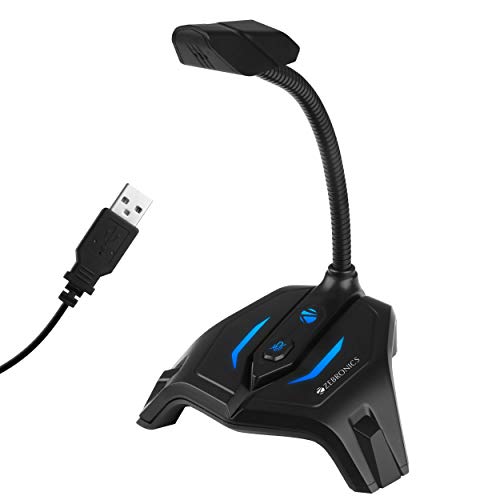
Zebronics Zeb-Klarity streaming microphone Zebronics

Zebronics Zeb-Klarity

4.0 / 5 ₹805

The cheapest way to stop sounding like a laptop. Any dedicated USB microphone beats a built-in laptop mic by a wide margin, and the Zeb-Klarity delivers that jump for under ₹900 — plug it in, pick it in Windows, and your voice suddenly has body instead of tinny room echo. Basic, omnidirectional and honest about what it is.

TypeUSB condenser
PatternOmnidirectional
ConnectionUSB-A, plug & play
Best forFirst mic, calls
  • Huge upgrade over any built-in laptop microphone
  • True plug-and-play — no drivers, no interface
  • Compact desk footprint with fixed stand
  • The lowest-risk way to test streaming
Best First Mic 02 / 12
FIFINE K669B streaming microphone FIFINE

FIFINE K669B

4.3 / 5 ₹2,590

The mic that launched a thousand channels. The K669B is the default recommendation for a first serious microphone: a solid metal body, a genuine cardioid capsule that hears you and ignores the room behind it, and a volume knob right on the front. It sounds vastly better than its price suggests, which is why you hear it in so many Indian streams.

TypeUSB condenser
PatternCardioid
BodyAll-metal
ControlVolume knob
  • Cardioid pickup rejects keyboard and room noise
  • All-metal build that survives desk life
  • On-body volume dial — no software needed
  • The go-to first mic for Indian creators
Best Budget XLR 03 / 12
FIFINE K669D streaming microphone FIFINE

FIFINE K669D

4.3 / 5 ₹2,990

A real dynamic mic at a condenser price. Where USB condensers pick up your ceiling fan and the street outside, the K669D’s dynamic capsule hears essentially only what is close in front of it — the reason broadcasters use dynamics in untreated rooms. It needs an XLR interface, which makes it the smart buy if you already own one or plan to.

TypeXLR dynamic
PatternCardioid
NeedsAudio interface
Best forNoisy rooms
  • Dynamic capsule ignores fans, echo and traffic
  • Broadcast-style sound in an untreated room
  • Studio XLR connection — upgrade-friendly
  • Requires an interface or mixer (budget for it)
Best RGB Gaming Mic 04 / 12
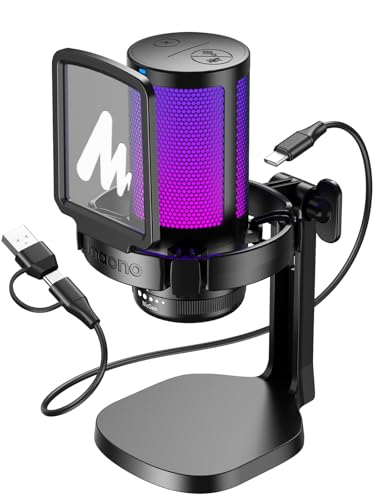
MAONO RGB Condenser streaming microphone MAONO

MAONO RGB Condenser

4.2 / 5 ₹2,998

Looks the part on camera, works the part off it. MAONO pairs the RGB lighting that makes a gaming desk photograph well with the controls that actually matter — a real gain dial, one-touch mute and onboard noise cancellation. At under ₹3,000 it is the most complete-feeling budget streaming mic, and half off its MRP.

TypeUSB condenser
LightingRGB
ControlsGain + mute
ExtraNoise cancellation
  • RGB lighting built for on-camera gaming setups
  • Physical gain dial and instant tap-to-mute
  • Onboard noise cancellation for busy rooms
  • 50% off MRP — strong value at ₹2,998
Best Starter Kit 05 / 12
FIFINE A6T Kit streaming microphone FIFINE

FIFINE A6T Kit

4.4 / 5 ₹3,590

Everything in one box, and the boom arm is the point. A mic on a desk stand picks up every keystroke through the table; on a boom arm it floats near your mouth where it belongs. The A6T bundles arm, shock mount and a tap-to-mute RGB condenser that works with PC and PS4/PS5 — buying these pieces separately costs more.

TypeUSB condenser
IncludesBoom arm + shock mount
Works withPC, PS4/PS5
ControlTap-to-mute
  • Boom arm included — kills desk thump and keystrokes
  • Shock mount isolates vibration from the table
  • Console-friendly: works on PS4 and PS5
  • Cheaper than buying mic and arm separately
Best Hybrid Value 06 / 12
MAONO A04-Gen2 streaming microphone MAONO

MAONO A04-Gen2

4.4 / 5 ₹4,298

Buy once, grow later. The A04-Gen2 runs as a simple USB mic today and switches to XLR the day you add an interface — no second purchase, no regrets. It records at a genuine 192kHz/24-bit and lands at 60% off MRP, making it the smartest sub-₹5,000 choice for anyone who suspects this hobby might get serious.

TypeUSB + XLR
Resolution192kHz / 24-bit
PatternCardioid
UpgradeInterface-ready
  • Dual USB and XLR — one mic for both eras
  • 192kHz/24-bit capture at a budget price
  • 60% below MRP right now
  • The buy-once pick for growing creators
Best Mid-Range USB 07 / 12
HyperX SoloCast 2 streaming microphone HyperX

HyperX SoloCast 2

4.5 / 5 ₹4,999

The no-nonsense streamer’s mic. HyperX skips the RGB theatre and spends the budget on the capsule and the tap-to-mute sensor — a single touch on top kills the signal with a visible indicator, which you will use constantly. Compact, tilt-adjustable and backed by NGENUITY software, it is the safest ₹5,000 in streaming audio.

TypeUSB condenser
PatternCardioid
MuteTap sensor
SoftwareHyperX NGENUITY
  • Tap-to-mute sensor with clear status indicator
  • Clean, broadcast-ready voice tuning out of the box
  • Compact tilt stand fits under a monitor
  • NGENUITY tuning and gain control
Best XLR/USB Workhorse 08 / 12
FIFINE K688 streaming microphone FIFINE

FIFINE K688

4.5 / 5 ₹5,490

The internet’s favourite budget podcast mic, and deservedly so. The K688 combines a broadcast-style dynamic capsule — the kind that makes untreated bedrooms sound like studios — with both USB and XLR outputs and zero-latency headphone monitoring. If your room echoes and your budget is real, this is the answer.

TypeDynamic, USB + XLR
PatternCardioid
MonitoringHeadphone jack
Best forUntreated rooms
  • Dynamic capsule tames echo and background noise
  • USB today, XLR when you add an interface
  • Zero-latency headphone monitoring built in
  • The value benchmark for podcast audio
Best Dynamic Podcast 09 / 12
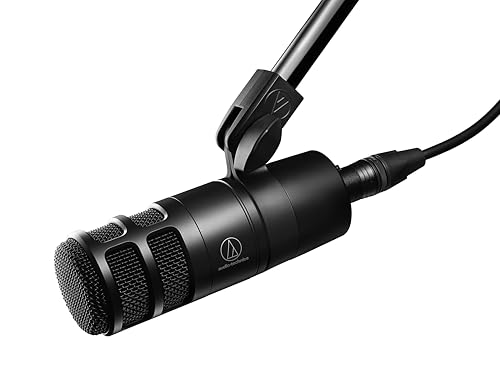
Audio-Technica AT2040 streaming microphone Audio-Technica

Audio-Technica AT2040

4.6 / 5 ₹7,949

Studio pedigree, room-proof design. Audio-Technica’s hypercardioid pattern is even tighter than standard cardioid — it hears your mouth and almost nothing else — and the built-in multi-stage windscreen and internal shock mount kill plosives and desk bumps without accessories. At 52% off MRP it is the best-sounding mic here under ₹8,000.

TypeXLR dynamic
PatternHypercardioid
Built-inWindscreen + shock mount
BrandAudio-Technica
  • Hypercardioid: the tightest pickup on this list
  • Internal shock mount and multi-stage pop filter
  • Legendary Audio-Technica capsule quality
  • 52% off MRP — serious value at ₹7,949
Best All-Rounder 10 / 12
Blue Yeti streaming microphone Blue / Logitech

Blue Yeti

4.6 / 5 ₹9,995

The most recognisable microphone on the internet, and still our all-rounder pick. Four switchable polar patterns mean one Yeti covers solo streaming (cardioid), two-person interviews across a desk (bidirectional), a room of guests (omni) and stereo music — no other mic here is this flexible. Plug-and-play, endlessly documented, and a genuine step up in richness.

TypeUSB condenser
Patterns4 switchable
ControlsGain, mute, monitor
SetupPlug & play
  • Four polar patterns — solo, duo, group or stereo
  • Onboard gain, instant mute and live monitoring
  • Rich, broadcast-familiar voice character
  • The most-supported mic in creator tutorials
Best Premium Streaming 11 / 12
HyperX QuadCast 2 S streaming microphone HyperX

HyperX QuadCast 2 S

4.7 / 5 ₹12,499

The streamer flagship, and the mic you have seen on a hundred Twitch cameras. The QuadCast 2 S records at 32-bit/192kHz — effectively impossible to clip, however loud you get mid-game — adds four polar patterns, a tap-to-mute top plate, a built-in anti-vibration shock mount and RGB that photographs beautifully. Complete, and 30% off MRP.

TypeUSB condenser
Resolution32-bit / 192kHz
Patterns4 switchable
Built-inShock mount, RGB
  • 32-bit float-grade capture — virtually unclippable
  • Four polar patterns plus tap-to-mute top plate
  • Integrated shock mount kills desk vibration
  • Signature RGB lighting for on-camera setups
Best Pro Broadcast 12 / 12
Shure MV7X streaming microphone Shure

Shure MV7X

4.7 / 5 ₹18,699

The podcast industry standard, minus the SM7B price. The MV7X inherits the voice-tuned dynamic capsule and internal air suspension that made Shure the default in professional podcast studios, in a rugged all-metal body built for a boom arm. XLR-only and proudly so: pair it with an interface and your voice arrives sounding like radio.

TypeXLR dynamic
PatternCardioid
BuildAll-metal, boom-ready
NeedsAudio interface
  • Shure’s voice-tuned broadcast capsule
  • Internal air suspension rejects handling noise
  • Built like studio gear — lasts decades
  • The professional endgame on this list

Before You Buy

What to Look For

Your Room Decides First

Quiet, soft-furnished space? A condenser will sound gorgeous. Fans, traffic, echo or family nearby? Buy a dynamic (K669D, K688, AT2040, MV7X) — it hears you and ignores the rest.

USB vs XLR

USB is instant and needs nothing else. XLR sounds better long-term but adds an interface (₹6,000+) to your budget. Hybrid mics (A04-Gen2, K688) let you start USB and switch later.

Polar Pattern

Cardioid (front only) is right for 90% of solo creators. Multi-pattern mics add bidirectional for interviews and omni for rooms — useful only if you actually record with others.

Onboard Controls

A physical gain dial and instant mute get used every session — software menus do not. Zero-latency headphone monitoring lets you hear yourself as listeners do, which fixes mic technique fast.

Budget for a Boom Arm

Desk stands transmit keystrokes and hold the mic too far away. An arm (bundled with the A6T) improves audio more than ₹3,000 extra on the mic. Add a pop filter for plosives.

Console & Platform Support

Most USB mics work on PS4/PS5; almost none work directly on Xbox. Check before buying if you stream from console — the FIFINE A6T explicitly supports PlayStation.

Explained

Types of streaming microphones

Microphones split by capsule (condenser or dynamic), by connection (USB, XLR or both) and by form factor. Here's how the main types compare.

USB condensers

The default streaming mic: sensitive, detailed and plug-and-play (K669B, Blue Yeti, QuadCast 2 S). Brilliant in a quiet room, unforgiving of fans and echo. Start here if your space is calm.

Dynamic broadcast mics

Less sensitive by design, which is the whole point — they reject rooms (K688, AT2040, Shure MV7X). The radio-studio sound, and the honest answer for Indian bedrooms with ceiling fans.

Hybrid USB/XLR mics

One mic, two lives (MAONO A04-Gen2, FIFINE K688). Run USB now; plug the same mic into an interface when you outgrow it. The best long-term value if you are unsure how far this goes.

All-in-one kits

Mic plus boom arm, shock mount and pop filter in a single box (FIFINE A6T). Cheaper than assembling the pieces, and the arm is what separates amateur-sounding audio from clean audio.

RGB gaming mics

Built to look right on camera as much as sound right (MAONO RGB, QuadCast 2 S). The lighting is genuine production value for face-cam streams — just make sure the audio specs justify the price too.

Lavalier & wireless clip mics

A different job entirely: clip-on mics for vlogging, pieces to camera and interviews on the move. Great for mobile creators, wrong choice for a seated desk stream — not included in this ranking.

Under the Hood

How microphone specs really work

Mic spec sheets are full of numbers that sound impressive and change nothing. Here is what actually shapes the voice your audience hears.

Condenser vs dynamic capsules

A condenser uses a thin, light diaphragm and needs power — it captures fine detail and air in your voice, and equally captures your fan, your keyboard and the street. A dynamic uses a heavier moving coil that needs more sound pressure to move, so it responds mainly to the loud thing right in front of it (your mouth) and largely ignores the quiet things further away (everything else). That is the whole trade: detail versus isolation. In a treated studio the condenser wins; in a real Indian room, the dynamic usually sounds more professional.

Polar patterns and the proximity effect

The polar pattern is the map of what a mic hears. Cardioid is heart-shaped — front-sensitive, rear-deaf. Hypercardioid (AT2040) narrows that further. Bidirectional takes front and back for face-to-face interviews; omni takes everything. Related trick: the proximity effect means directional mics get noticeably bassier as you move closer — broadcasters exploit this for that warm radio voice, and you can too, by speaking 10–15cm away rather than across the desk.

Sample rate, bit depth and why 32-bit matters

Sample rate (48kHz, 96kHz, 192kHz) and bit depth (16, 24, 32) describe capture resolution. Honestly, 48kHz/24-bit is plenty for voice — higher numbers mostly fill spec sheets. The genuinely useful one is 32-bit capture (QuadCast 2 S): its enormous dynamic range means a sudden shout or clutch-moment scream cannot clip into distortion, which is a real problem in live gaming audio. Beyond that, gain staging beats specs: set levels so your normal speech peaks around −12dB.

Gain, monitoring and the accessories that matter

Gain is how much the mic amplifies; too low gives a hissy, thin recording, too high clips. A physical dial makes this a one-second fix. Zero-latency monitoring (a headphone jack on the mic) plays your voice back with no delay so you hear plosives and distance problems as they happen. Then the hardware around the mic: a shock mount stops desk bumps travelling up the stand, a pop filter or windscreen stops "P" blasts hitting the diaphragm, and a boom arm gets the capsule close to your mouth — the cheapest big upgrade in audio.

Our Recommendation

The best all-rounder is the
HyperX QuadCast 2 S

If we had to pick just one: the QuadCast 2 S at ₹12,499 is the most complete streaming microphone here — 32-bit capture that never clips, four polar patterns, a built-in shock mount, tap-to-mute and RGB that earns its place on camera. But every mic here wins its own situation:

  • Tightest budget: Zebronics Zeb-Klarity — ₹805 and far better than a laptop mic
  • First real mic: FIFINE K669B — the ₹2,590 classic
  • Noisy room, small budget: FIFINE K688 — dynamic, USB and XLR
  • Best kit deal: FIFINE A6T — boom arm and shock mount included
  • Buy once, grow later: MAONO A04-Gen2 — hybrid at ₹4,298
  • Most versatile: Blue Yeti — four patterns, one mic
  • Professional endgame: Shure MV7X — the podcast standard
Buy Our Pick on Amazon

FAQ

Frequently Asked Questions

Buy USB unless you already own an audio interface. A USB mic plugs straight into your PC or PS5 and works in thirty seconds; XLR mics need an interface (₹6,000+) or mixer on top of the mic price. XLR wins on ceiling — better preamps, no built-in electronics to become obsolete, and it is what studios use — but for one person streaming or podcasting, a good USB mic like the QuadCast 2 S or Blue Yeti sounds excellent and saves the hassle. The clever middle path is a hybrid like the MAONO A04-Gen2 or FIFINE K688: USB now, XLR when you are ready.
This is the most important question in this guide, and it is about your room, not your budget. Condensers (Blue Yeti, QuadCast, FIFINE K669B) are sensitive and detailed — they sound gorgeous in a quiet, soft-furnished room and terrible in an echoey one with a ceiling fan, because they pick up everything. Dynamics (FIFINE K669D/K688, AT2040, Shure MV7X) hear only what is close in front of them and ignore the rest, which is why broadcasters use them. If you record in an untreated Indian bedroom with fans, traffic or family noise, buy a dynamic.
It is the shape of what the mic hears. Cardioid picks up the front only — the right choice for 90% of solo streaming and podcasting. Bidirectional hears front and back for a two-person interview across a table. Omnidirectional hears everything equally, useful for a room of people, useless for keeping your fan out of the recording. Stereo captures left-right width for music or ASMR. Multi-pattern mics (Blue Yeti, QuadCast 2 S) let you switch; single-pattern mics do cardioid well and cost less.
The boom arm matters more than people expect. Desk stands transmit every keystroke and mouse click straight up into the mic, and they park the capsule too far from your mouth — the main reason budget mics sound "distant". A boom arm floats the mic 15–20cm from your face and isolates it from the desk, which improves your audio more than spending ₹3,000 extra on the mic itself. The FIFINE A6T bundles one. A pop filter (or the built-in windscreens on the AT2040 and MV7X) tames plosive "P" and "B" blasts and costs a few hundred rupees.
Partly — a dynamic mic with a tight pattern, placed close, rejects a remarkable amount. But microphones cannot un-hear a loud room, so pair the hardware with basics: record with the fan on low or off, put the mic 10–15cm from your mouth (close mic-ing drowns out the room), point the back of a cardioid mic at the noise source, and add soft furnishings — a curtain, a rug, a bed nearby — to kill echo. Free software noise suppression (NVIDIA Broadcast, OBS filters, Discord Krisp) finishes the job. Room treatment plus a ₹5,000 dynamic beats a ₹15,000 condenser in a bad room every time.