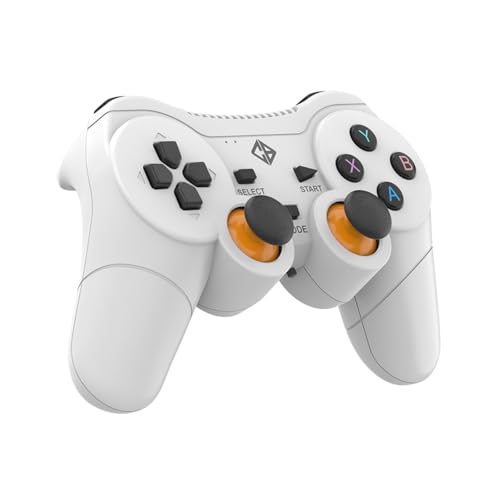
Controller marketing is full of jargon — TMR, hall effect, polling rate, adaptive triggers. Here's what each spec actually does to the pad in your hands.
Stick sensors: potentiometer → hall → TMR
Traditional sticks read position through potentiometers — resistive tracks that a wiper physically scrapes across. That contact wears, and worn tracks report movement that isn't happening: stick drift. Hall-effect sticks replace the contact with magnets and sensors — nothing touches, so nothing wears out. TMR (tunnel magnetoresistance) sticks use the same contactless principle with a more sensitive readout: finer precision, lower deadzones and lower power draw. In 2026 hall sticks start at ₹1,599 (EvoFox One S V2) and TMR at ₹4,499 (Drakon) — while every first-party pad still ships potentiometers.
Wireless links & polling rate
How a controller connects matters more than whether it's wireless. Bluetooth is universal but adds latency — fine for casual and mobile play. A dedicated 2.4GHz dongle is a private radio link that, at a 1000Hz polling rate (the pad reporting once per millisecond), performs like a cable: the Cyclone 2 measures around 10ms end-to-end. Consoles use their own low-latency protocols (Xbox Wireless, PS5's BT variant). Tri-mode pads bundle all three, which is why they're the value kings.
Triggers: analog, hall and adaptive
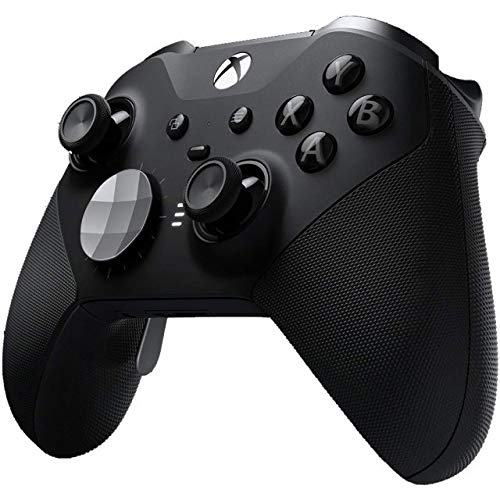
Triggers are analog inputs — how far you pull maps to how hard you brake or accelerate. Hall triggers resist wear like hall sticks. Trigger stops (Wolverine, Elite 2, Cyclone 2) mechanically shorten the pull to a mouse-like click for faster firing in shooters. Sony's adaptive triggers go the other way entirely: tiny motors vary the resistance in real time, so a bowstring genuinely tightens under your finger.
Rumble, haptics & back buttons
Standard pads shake with two ERM rumble motors; the DualSense's HD haptics use voice-coil actuators that render texture — rain, gravel, a heartbeat — rather than just buzzing. Back paddles are the biggest competitive upgrade: they let you jump, reload or crouch without lifting a thumb off the sticks, which is why every pro pad (and the ₹7,599 Ultimate 2) has them. On-board profiles store your remaps in the pad itself, so setups follow you between machines.