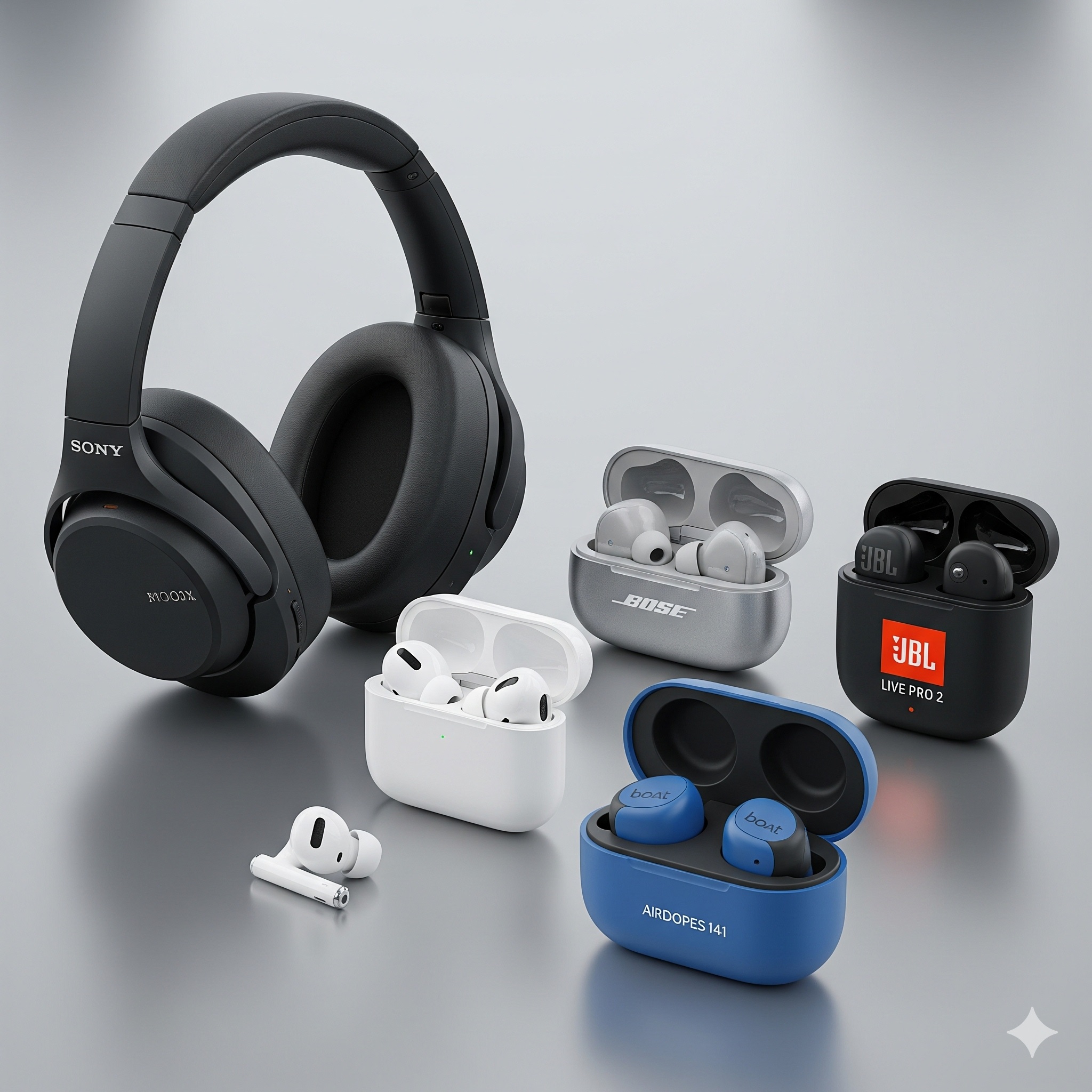
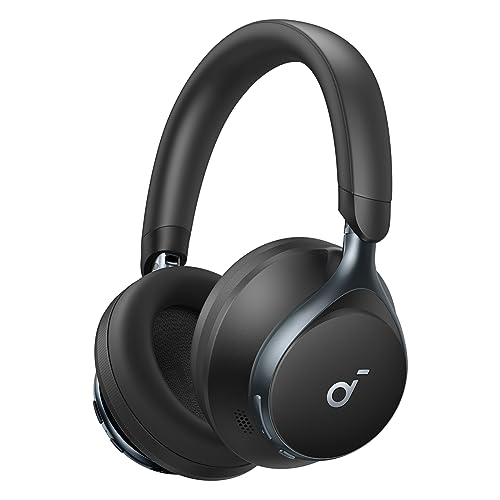
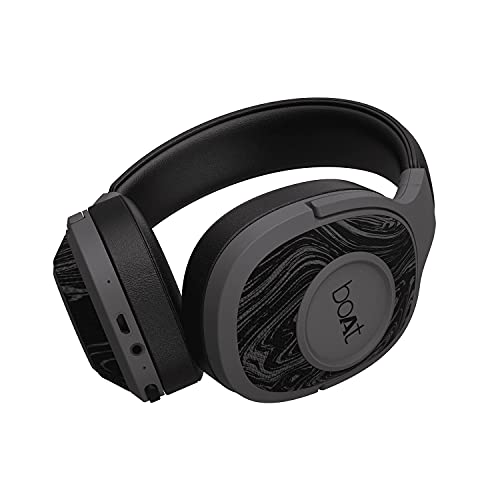
Modern wireless headphones combine acoustic drivers, noise-cancelling microphones and Bluetooth audio codecs to deliver sound that once needed a wired hi-fi rig. Understanding the core technology makes it far easier to compare models and read the spec sheets.
Drivers & sound signature
The driver is the tiny speaker inside each ear-cup; over-ears typically use 40–50mm dynamic drivers. Larger drivers move more air for fuller bass, but tuning matters more than size — the sound signature is how a brand balances bass, mids and treble. Indian brands like boAt and Noise favour boosted bass; Sony, Bose and Sennheiser aim for a more neutral, detailed balance you can reshape with an app EQ.
Active Noise Cancellation (ANC)
ANC uses external microphones to sample ambient noise, then plays an inverted "anti-noise" wave that cancels it before it reaches your ear. Hybrid ANC adds a second internal mic for tighter accuracy, while adaptive ANC (Sony XM6, Bose Ultra) continuously re-tunes to your surroundings and even your ear shape. It works best on constant low-frequency drone — plane engines, AC hum, traffic — and less on sudden voices.
Bluetooth codecs
A codec compresses audio for the Bluetooth link. SBC is the universal baseline; AAC is what iPhones use; and LDAC (Sony) and aptX Adaptive (Qualcomm) carry near-Hi-Res quality on supported Android phones. Bluetooth Multipoint is separate but just as useful — it keeps the headphones paired to two devices, so a laptop call interrupts your phone music automatically.
Battery & fast charging
Over-ears win on stamina because the headband has room for a big cell — 30 to 100 hours is normal, versus 6–10 for earbuds. Nearly every modern pair supports fast charging, where a 3–10 minute top-up buys several hours of playback, and most fall back to a wired 3.5mm or USB-C connection when the battery finally runs flat.