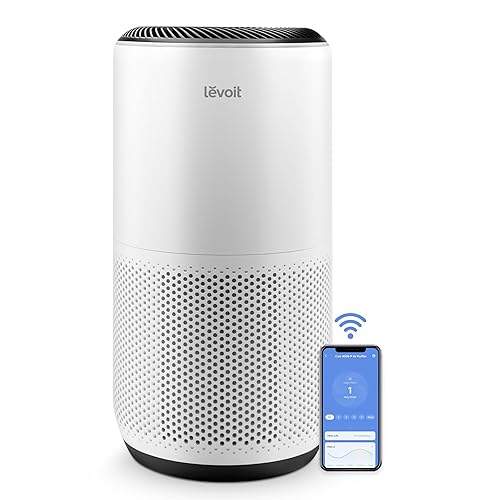
An air purifier is deceptively simple — a fan pulls room air through filters and pushes clean air back out — but a few numbers decide whether it actually clears your room or just hums in the corner.
CADR & air changes per hour
CADR (Clean Air Delivery Rate), measured in m³/h, is how much clean air the purifier delivers — the most honest performance figure. Pair it with ACH (Air Changes per Hour): for allergies and smog you want the purifier to cycle all the air in the room about 5 times an hour. Divide CADR by your room volume to check; if a ‘600 sq ft’ unit only manages two changes an hour in that space, it's over-rated.
HEPA grades
True HEPA is a standard, not a marketing word. H13 captures 99.97% of particles at 0.3 microns and H14 99.995% — both trap PM2.5, smoke, pollen and most bacteria. Lower ‘HEPA-type’ filters (H11 and below) leak far more, so H13 is the grade to insist on, as every pick in this guide uses.
The filter stack
Most purifiers layer several filters. A pre-filter catches hair and large dust (and is often washable), activated carbon adsorbs odours, gases and VOCs, and the True HEPA layer traps the fine particles. Extras like Winix's PlasmaWave or Dyson's formaldehyde catalyst target germs and specific gases. More stages help, but the HEPA and carbon layers do the heavy lifting.
Filter cost & maintenance
The purifier is a one-time cost; filters are forever. Replacement intervals range from 6 months (Xiaomi, Levoit) to nearly two years (Coway), at roughly ₹1,500–₹4,000 each. Washing the pre-filter monthly extends HEPA life. Always price out three years of filters before buying — it can flip which purifier is truly cheapest.